Infrared rays warm your body. This makes you feel healthier and happier. The strongest natural source of infrared is the sun.
Infrared radiation, also known as thermal radiation, is a component of optical radiation (light in the broader sense) and thus a part of the electromagnetic spectrum.
Compared to visible light, it has a longer wavelength, ranging from 780 nanometers to 1 millimeter.
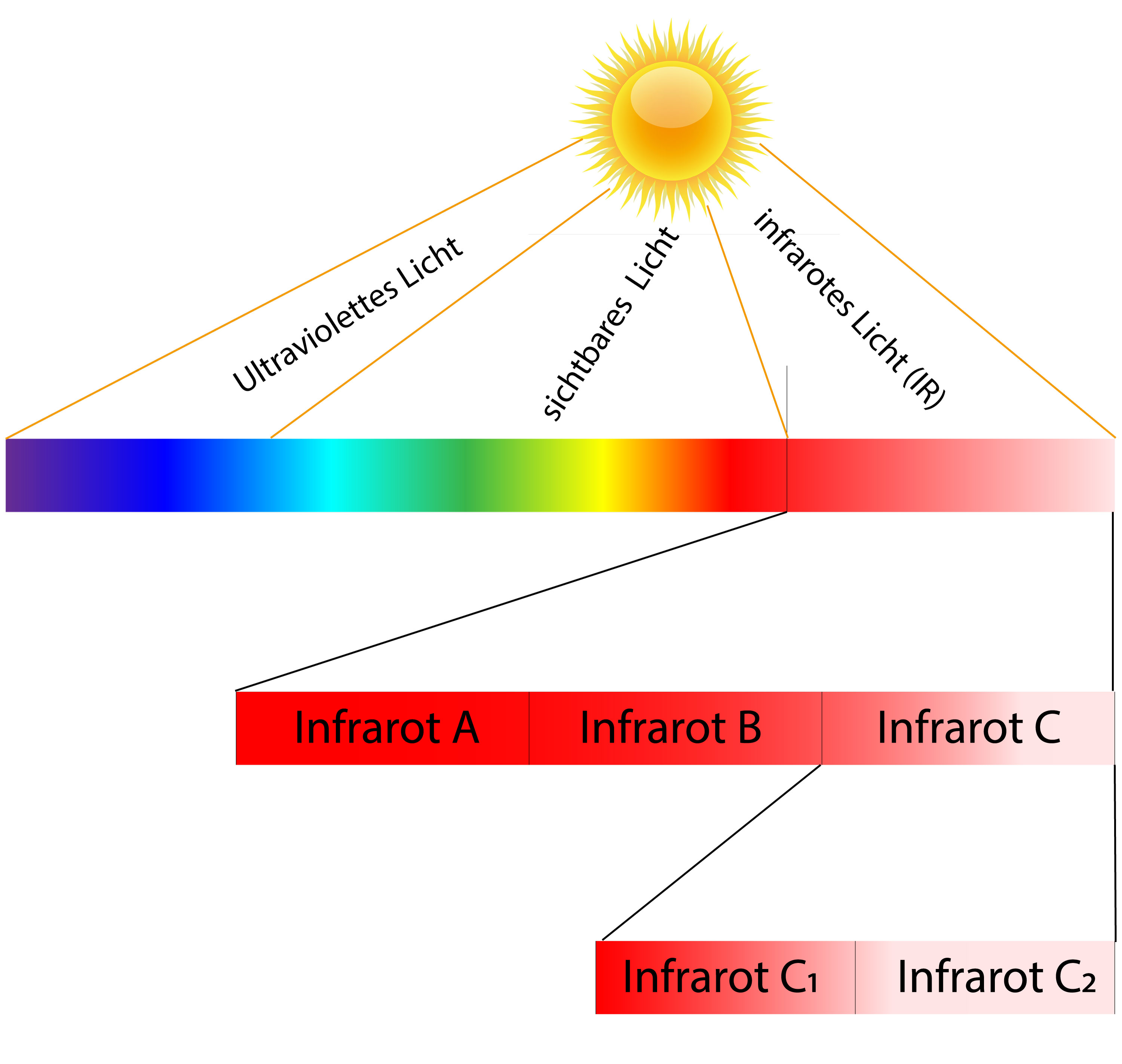
Infrared radiation is divided into Infrared A, Infrared B, and Infrared C.
IR-C can be further divided into Infrared C1 and Infrared C2.
Infrared (IR for short) refers to a specific type of electromagnetic radiation that is in the frequency range between visible light and microwaves. These waves consist of electric and magnetic fields that are perpendicular to each other and to the direction of propagation. Electromagnetic waves can travel through both a vacuum and matter and are characterized by a range of different frequencies and wavelengths. Examples of electromagnetic waves include: radio waves, microwaves, infrared radiation, visible light, ultraviolet radiation, X-rays, and gamma rays. Each of these waves has a different frequency and wavelength, which affects its properties and applications.
Infrared radiation has a wavelength range from 780 nanometers to 1 millimeter. It is invisible to the human eye because its wavelength is longer than that of visible light. Infrared rays are emitted by many objects, especially warm or hot bodies.
The wavelengths can be divided as follows:
Infrared radiation was discovered in 1800 by Friedrich Wilhelm Herschel. During an experiment, he wanted to measure the different colors of sunlight. He used a prism to let the sunlight shine through and used a thermometer for the various color ranges. He found that the highest temperature reading occurred after the red end of the visible color spectrum. Outside the red range, the temperatures even increased further. From this, he concluded that there is a continuation of sunlight beyond the color red.
The largest natural source of infrared radiation is the sun. It radiates with a surface temperature of about 6000°C, with slightly less than half of the solar radiation consisting of infrared rays.
In the medical field, infrared rays are used for the targeted treatment of diseases.
Infrared rays can penetrate deep into the skin and warm the body from the inside. During the application, blood vessels expand, circulation is stimulated and gets going.
Infrared has a positive effect on many ailments. Good results are noticeable for headaches and back pain. For sprains and strains, as well as for arthritis and arthrosis, a pleasant and soothing effect is quickly felt.
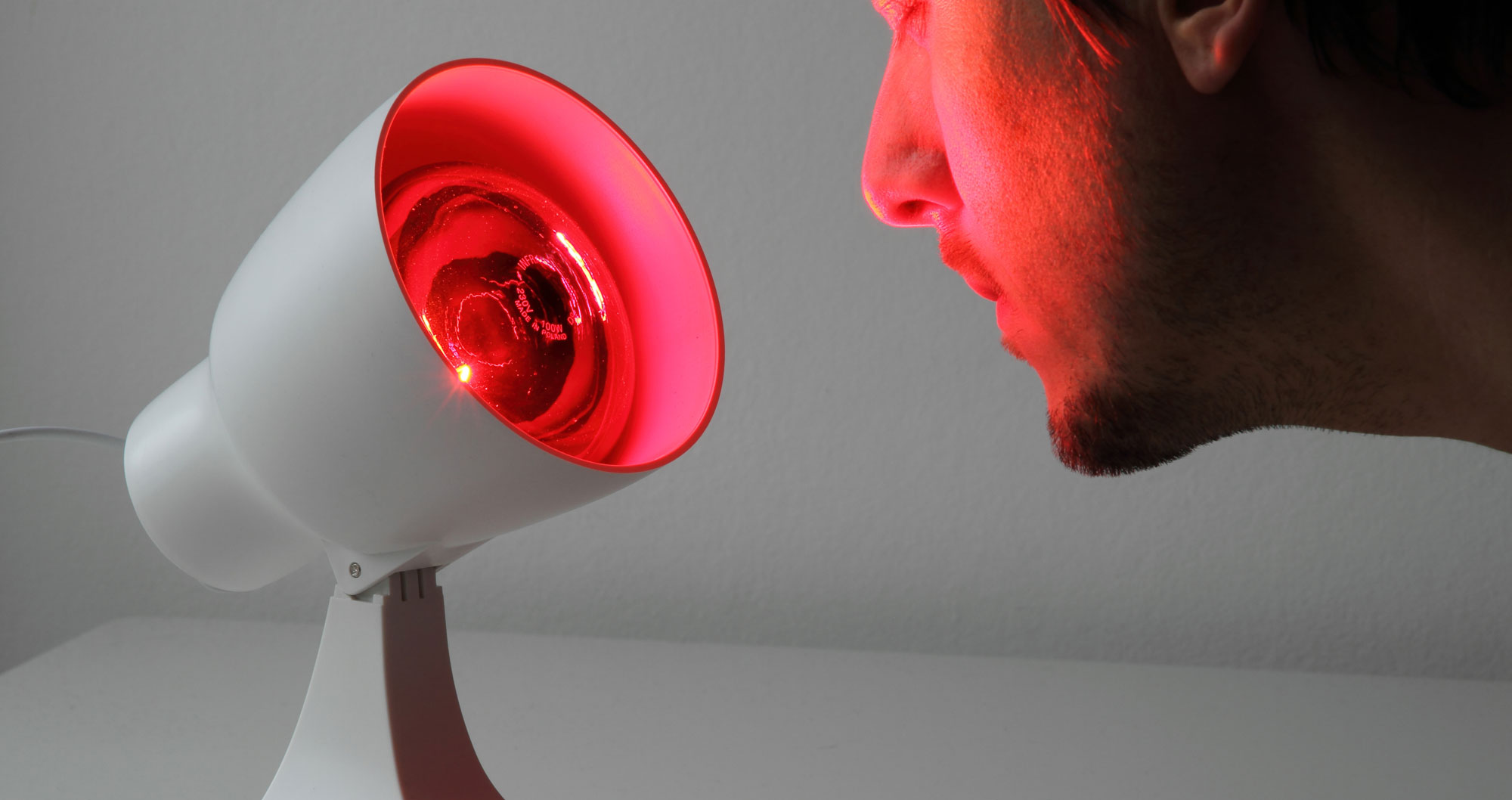
Infrared rays are particularly effective for stress conditions and muscle tension. The infrared heat works especially well after a long, strenuous day in combination with fragrant oils and pleasant sounds. The relaxation effect leads to harmony of body and mind.
With regular use of infrared saunas, the immune system can be strengthened. During the applications, the body is exposed to a short period of stress. This increases the heart rate, lowers blood pressure, and reduces inflammation. The risk of common colds is reduced.
The healthy sweating effect in the infrared sauna already occurs at about 40°C. For comparison: in a Finnish sauna, a temperature of 80°C to 100°C is required for this. Sweating in the infrared sauna does not lead to fatigue as quickly. The application is also highly recommended for older people and individuals with a sensitive circulatory system.
Infrared can be used to combat acne, eczema, and psoriasis. The cleansing of skin cells is accelerated.
Infrared rays are able to penetrate deep into the tissue. They expand the blood vessels, promote circulation, and lower high blood pressure.
Infrared heaters convert electrical energy into infrared radiation. The deep-acting infrared radiation does not heat the air, but the body it strikes or penetrates. The infrared rays cause the molecules to vibrate and heat them directly.
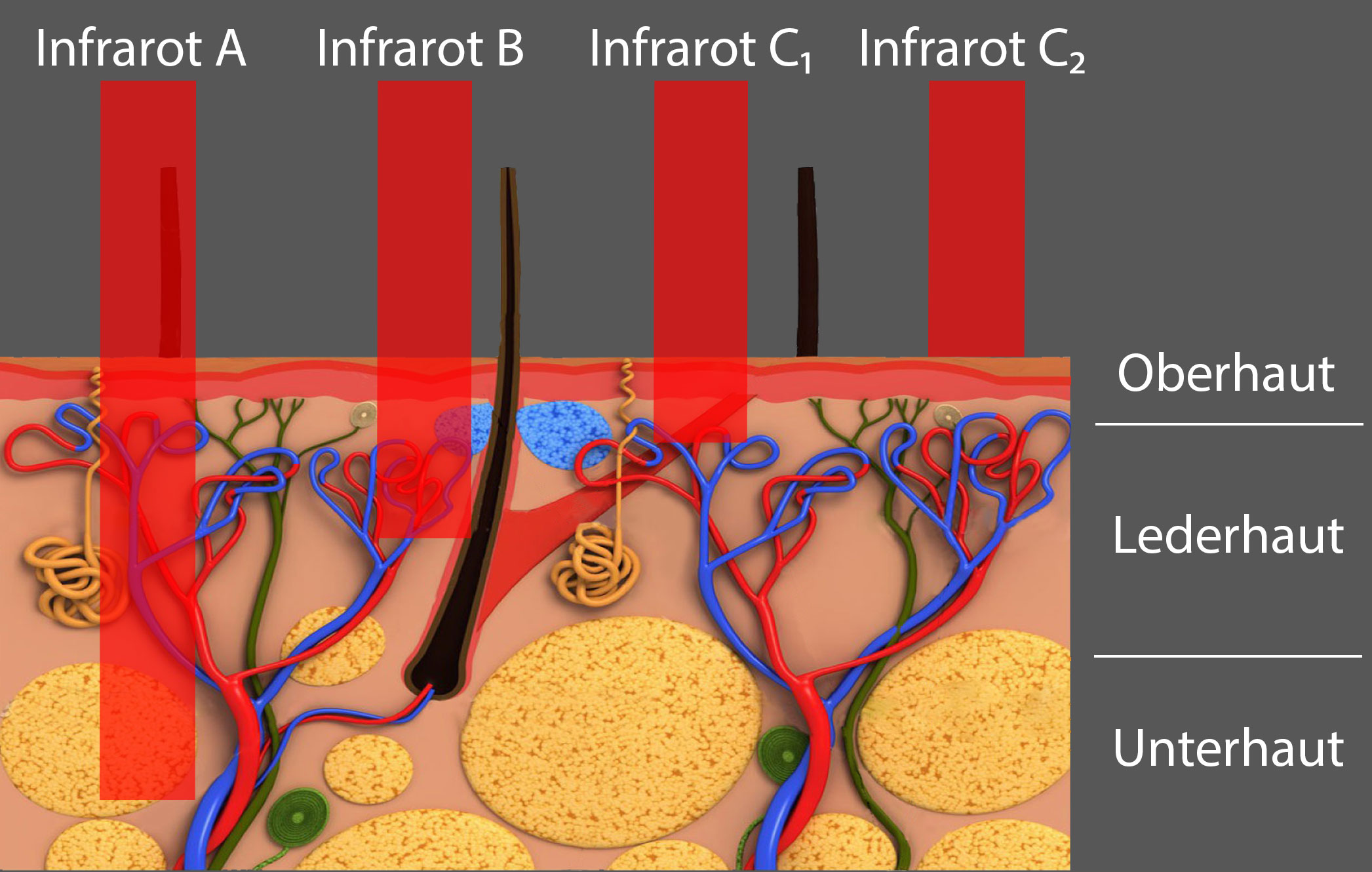
Depending on the type of radiation, infrared radiation penetrates the skin to different depths. Infrared A penetrates up to 5 mm, Infrared B up to 1.5 mm, and Infrared C1 up to 0.5 mm. IR-C2 is completely absorbed by the skin surface.
For the infrared irradiation of the human body, the radiation that reaches and warms the most blood vessels is particularly important, namely IR-B and also IR-C1 radiation. They warm the irradiated tissue and the blood directly and thus particularly effectively. IR-A penetrates even deeper into the tissue and warms additional blood vessels and tissue. With IR-ABC heaters, however, the proportionally higher IR-B value is decisive for the higher efficiency, not the IR-A component.
IR-C Radiation – particularly gentle infrared heat
IR-C radiation is the longest-wave infrared radiation. It can be divided into Infrared C1 and Infrared C2. It does not generate high temperatures, but a pleasant warmth. The heat treatment is therefore particularly gentle and mild. The rays penetrate only about 0.5 millimeters deep into the skin, thus warming only the uppermost skin layers. Only the IR-C1 rays can reach the blood vessels and thus produce a deep heat effect. With IR-C infrared heaters (also called heat radiators), special attention should be paid to the materials used and to electromagnetic safety. Infrared C2, on the other hand, is already completely absorbed by the surface and cannot radiate into the depths. However, it can also play a supporting role in warming up.
IR-B Radiation – powerful deep heat for health
IR-B radiation is also known as medium-wave radiation. It includes all electromagnetic waves in a range from 1400 to 3000 nanometers. The infrared-B rays (e.g., of the SOLIS® TWS® deep-heat radiator) can penetrate up to 1.5 millimeters into the skin. Thus, the IR-B rays reach the blood vessels directly and with full intensity, warming them directly. The deep heat effect is noticeable after just a few minutes and unfolds in the form of two deep heat effects (TWE1 = local warming and TWE2 = thorough warming). Unlike Infrared A, IR-B is particularly gentle on the skin. With normal use, there is no limit to the maximum irradiation duration, and the IR-B deep heat poses no danger to the skin and eyes.
IR-A Radiation – the intensive deep heat
IR-A radiation is the shortest-wave infrared radiation with a wave range of 780 to 1400 nanometers. This makes IR-A radiation the most intensive infrared radiation. It penetrates about four to five millimeters into the skin and causes the molecules to vibrate particularly strongly. With infrared-A radiation, it is essential to pay attention to the intensity in order not to overload the irradiated skin and eyes. Therefore, an infrared heater with IR-A should never be used without safety glasses or special filter glass. The special filter glass is already integrated in the SOLIS® VSS® full-spectrum heater.
Electromagnetic waves cover a very broad spectrum and thus have very different penetration depths into various bodies and materials. The penetration depth of electromagnetic waves into the body depends on the frequency of the waves as well as the electrical and magnetic properties of the body tissue. For the desired deep heat effect, it is particularly important that the infrared rays radiate down to the blood vessels, so that the blood can be warmed directly and the heat can be quickly transported to the core of the body. This allows for a gentle increase in the body's core temperature without overloading the skin.
The eyes are particularly sensitive to thermal effects. Here, limit values (e.g., according to ICNIRP) must be strictly adhered to. Especially with infrared A emitting heaters, a corresponding filter glass should be used and a radiation technical report should be available.
The shorter the wavelength, the higher the penetration depth:
Through indirect heat conduction, the temperature increase from the infrared heat can also continue into deeper layers. For example, if Infrared C1 rays can penetrate about 0.5 mm directly into the tissue, the heat can reach deeper layers through heat conduction. This allows for a much gentler irradiation but also requires significantly more time to produce a corresponding deep heat effect. Therefore, depending on the skin type, the irradiation should be chosen so that an effective penetration depth is achieved without thermally overstraining the skin.
Surface heaters only emit IR-C2 rays, which are completely absorbed by the skin surface. Our skin cools this top layer through perspiration. Thus, very little heat can be conducted to deeper skin layers. For deep heat applications, surface heaters are therefore not suitable. Depending on the skin type and desired application area, one should therefore opt for deep-heat heaters or full-spectrum heaters.
The directly irradiated tissue of the body parts is penetrated with infrared deep heat. This expands blood vessels and relieves muscle cramps.
A pain-relieving and anti-inflammatory effect occurs. Problem areas (e.g., neck, back, shoulder, knee, etc.) can thus be treated specifically and effectively.
Infrared can be used to combat acne, eczema, and psoriasis. The cleansing of skin cells is accelerated.
Infrared radiation produces a variety of positive effects when it penetrates the skin. With the local deep heat effect, the directly irradiated area is warmed directly. The skin and the underlying muscle tissue as well as the joints experience a temperature increase. On the one hand, this makes the metabolism run more effectively, which can activate and strengthen self-healing powers on the spot. On the other hand, the body's own cortisol is released, which has a pain-relieving effect. This is also the reason why pain and tension usually disappear immediately after an infrared application. In the case of chronic complaints, they unfortunately return, but regular and recurring infrared irradiation can lead to a permanently improved and even pain-free condition.
Frequent causes of tension are muscle cramps, triggered by excessive muscle tone. Muscle tone refers to the state of tension of the muscle. Even at rest, there is a basic level of tension. If this is too high, it can lead to painful tension and pain. This is exactly where infrared deep heat comes in. It warms the muscle and stimulates local blood circulation. This allows the muscle to relax and reduce its basic tension. The pain is thus eliminated naturally and directly at the source.
The deep heat increases the blood flow to the irradiated tissue and thus lowers blood pressure in the long term. The appearance of the skin is also improved. This can combat acne, eczema, and psoriasis. Toxins can be excreted through sweat (popularly known as "detoxification"), and the cleansing of skin cells is accelerated. The treatment of certain skin diseases with deep-heat infrared is very effective, such as psoriasis, neurodermatitis, eczema, and acne.
The second deep heat effect, thorough warming, occurs through the absorption and so-called heat transport of the blood.
First, the molecules of our blood absorb the deep heat radiation. The absorbing atoms and molecules are set into vibration. This has two positive consequences:
1. The warmed molecules of the blood move faster and mix better.
2. The molecules require more space and expand (thermal expansion). This leads to a vasodilating effect (vasodilation). This can lower blood pressure, eliminate circulatory disorders, and relieve the cardiovascular system.
Through infrared irradiation, the heat quickly reaches subcutaneous tissue and can warm the entire body via the bloodstream.
The immune system is strengthened and the musculature relaxes, including the smooth muscles surrounding the blood vessels (tunica media).
The body's core temperature rises slowly and gently. The metabolism is stimulated, and the blood circulation of organs and tissues is increased.
The bloodstream supplies all cells of the body with nutrients and oxygen. The blood, enriched with infrared heat, is distributed throughout the body via our cardiovascular system. In particular, the blood also transports the heat to the body's core, which can cause the core body temperature (temperature of the vital organs) to rise. This artificial fever, also called healing fever, can be part of a therapeutic hyperthermia treatment. At the elevated temperature, the body's natural defense mechanisms can work faster, enzyme reactions can occur more frequently, and infections can be fought off by immune cells more quickly. At the same time, pathogens such as viruses or bacteria have no suitable thermal shield, and the heat paralyzes their metabolism.
The slight increase in core body temperature allows the body to produce defense mechanisms. The organism is subjected to controlled stress. The principle is similar to that of a fever, but without the negative effects, hence it is also called "artificial fever".
When our body is damaged or injured, it sets various mechanisms in motion to repair the damage and regenerate affected tissue. These processes run optimally and accelerated at an elevated temperature. With the promotion of blood circulation, metabolism and oxygen supply also increase.
The special thing about self-healing is that it occurs naturally, i.e., completely without medication, which can impair the efficiency of self-healing in the long run.
Infrared applications in medicine are very diverse and have a long tradition. They are not only used to relieve muscle pain and tension, but also, for example, for autoimmune diseases or wound healing disorders. The radiation can inhibit inflammation and is also used for diseases of the musculoskeletal system such as arthrosis, joint inflammation (arthritis), or ankylosing spondylitis. The deep heat can help with pain ranging from ordinary muscle soreness to complex regional pain syndromes.
Tension can arise in different ways. A common cause is emotional stress. When the body is constantly under stress, this can cause certain muscles to tense up and cramp. These muscle tensions can lead to pain, cramps, and stiffness.
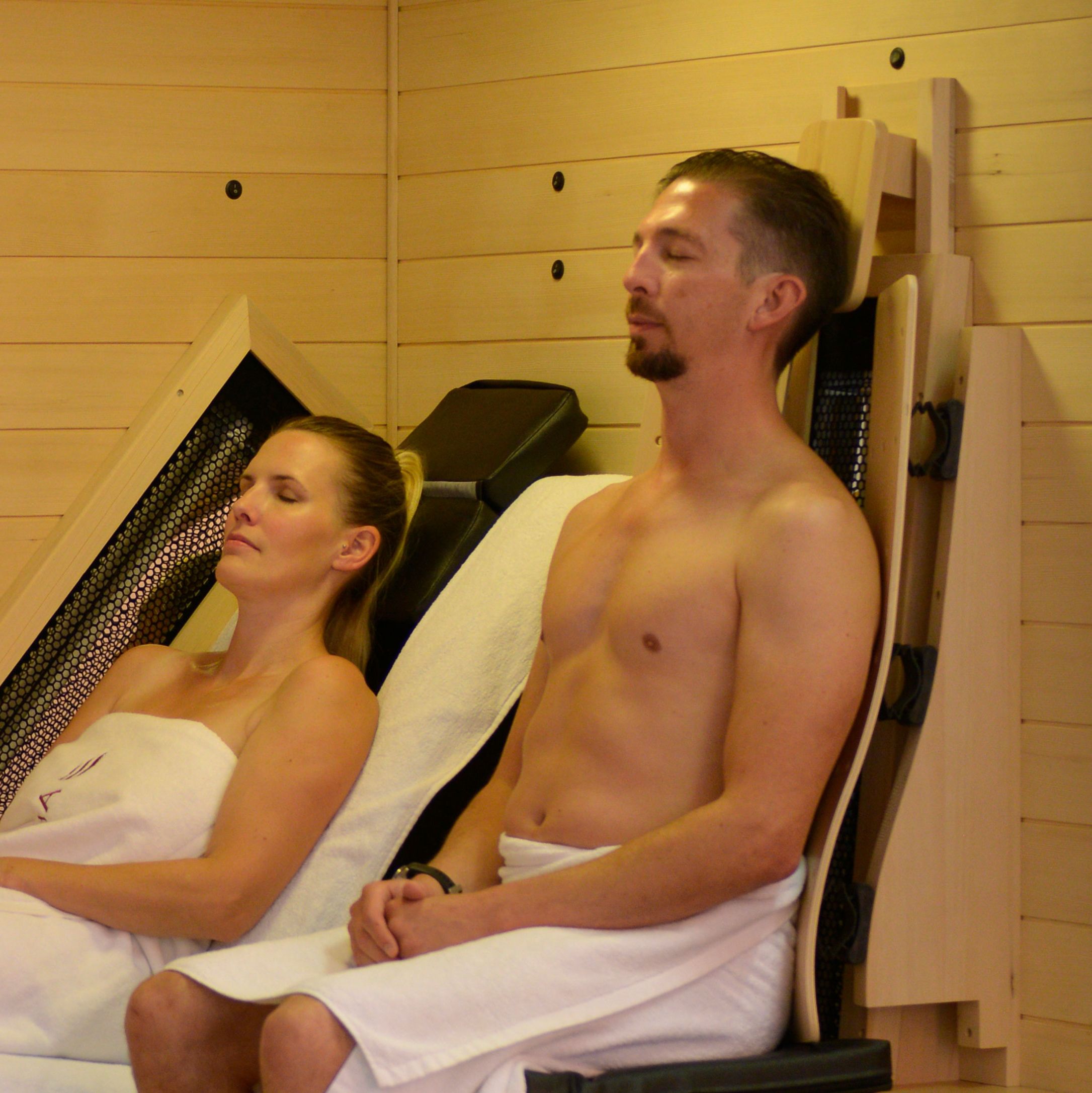
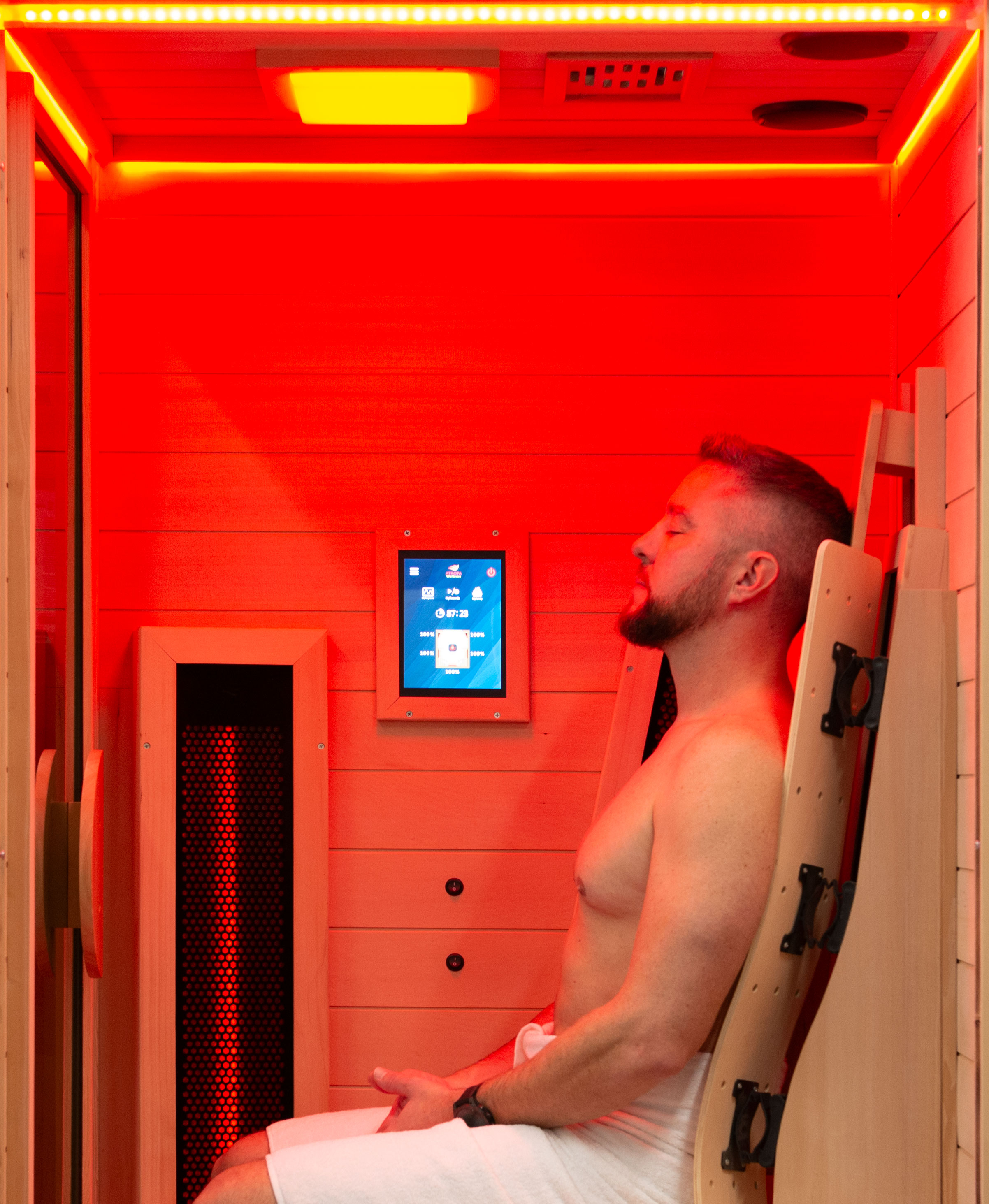
An application in the infrared sauna creates a quiet environment far from any distractions. In this wellness oasis with fragrant aromas, pleasant sounds, and relaxing color lights, it is possible to leave the stress of everyday life behind and truly switch off. This acts like a balm for our soul.
Unlike, for example, a Finnish sauna, it is not the room air but the body that is directly heated. This is not only more energy-efficient but also gentler on the circulatory system. During the application, the pulse and blood pressure remain at a low level, and a meditative effect sets in. Overexertion and injuries are avoided.
In a deep-heat infrared sauna, rod heaters are always used, which only irradiate a small part of the skin surface. This is necessary to prevent a thermal defense reaction to the supplied heat, i.e., so that the body allows the temperature to rise. In this way, the core body temperature can be gently increased by a few tenths of a degree, creating an artificial healing fever.
The intensive infrared rays penetrate deep and directly into the dermis, thus warming the body from within. Self-healing processes are activated, and problem areas can be treated effectively and directly. The deep heat effects TWE1 and TWE2 are optimally utilized.
Recommended application time: approx. 15 - 25 minutes.
Activating infrared radiation with moderate deep heat. Optimal for wellness, relaxation, and healthy sweating. The body detoxifies, and the circulation is stimulated. There is still enough deep heat for a slower but effective warming of the body.
Recommended application time: approx. 20 - 35 minutes.
Corresponds in application to a heat sauna with surface heaters. The infrared heat radiation is already absorbed by the outermost layer of the skin (epidermis). The heat is slowly conducted to the underlying skin layers. Ideal for gentle warming on cold winter days.
Recommended application time: approx. 30 - 60 minutes.
Corresponds to a bio sauna or herbal sauna. First, the infrared sauna is preheated to the desired air temperature at 100%. Then the intensity is reduced to 0 - 30%, and essential oils and color lights are used. This type of sauna is particularly suitable for high blood pressure.
Recommended application time: approx. 30 - 60 minutes.
The durable SOLIS® TWS® deep-heat radiator, now in its 4th generation, is the all-rounder among infrared heaters. It is very well suited for deep heat applications without putting excessive strain on the body.
Guaranteed no Infrared-A radiation.
If you are looking for fast deep heat with high intensity, you should definitely choose our SOLIS® VSS® full-spectrum heater. Here, the infrared heat rays penetrate surprisingly deep into the tissue without causing overload.
A breakthrough in the infrared heater market!
Reliable panel heater with LOW-EMF technology. The sophisticated carbon technology allows for a particularly gentle and even surface irradiation. Ideally suited for increasing the room temperature.
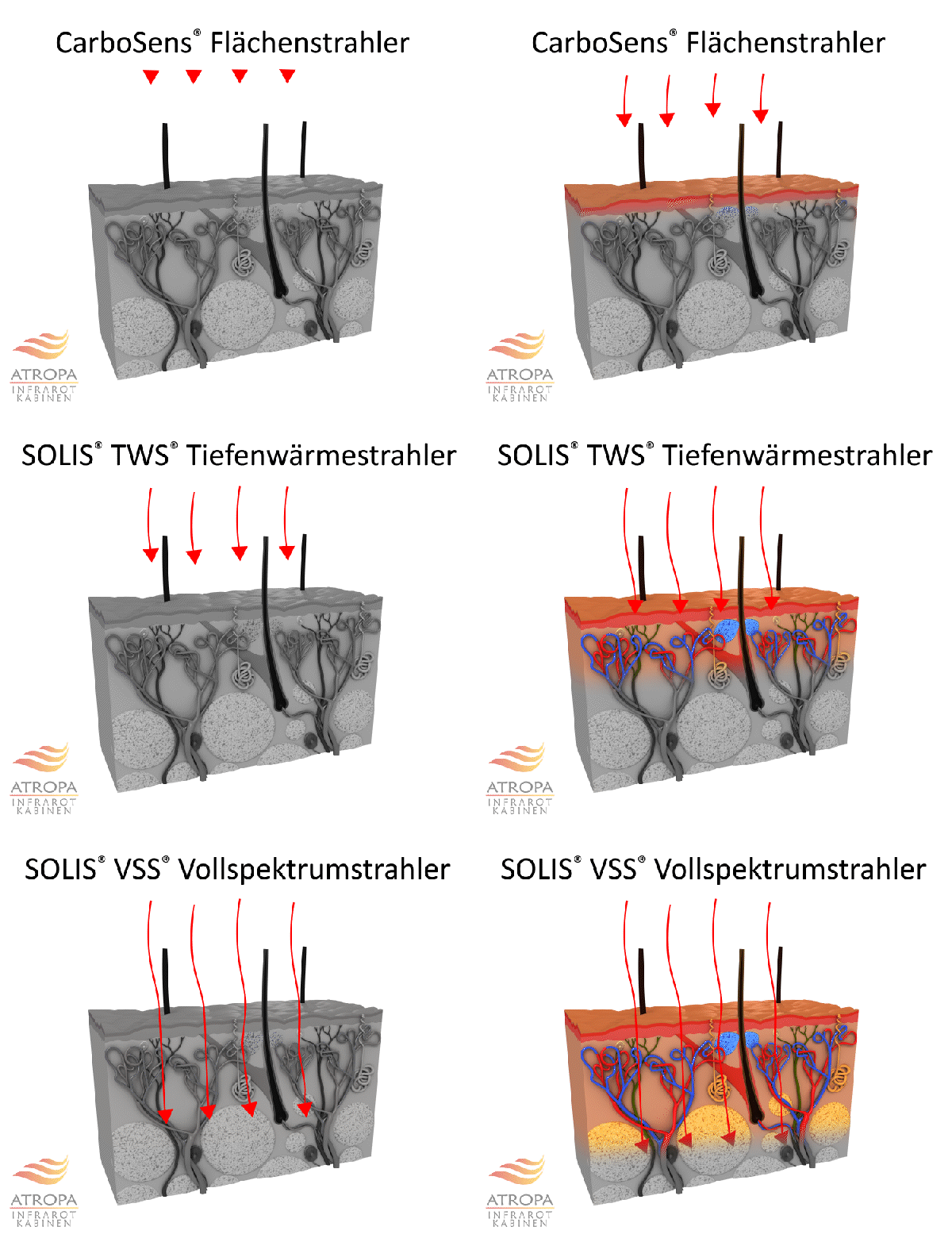
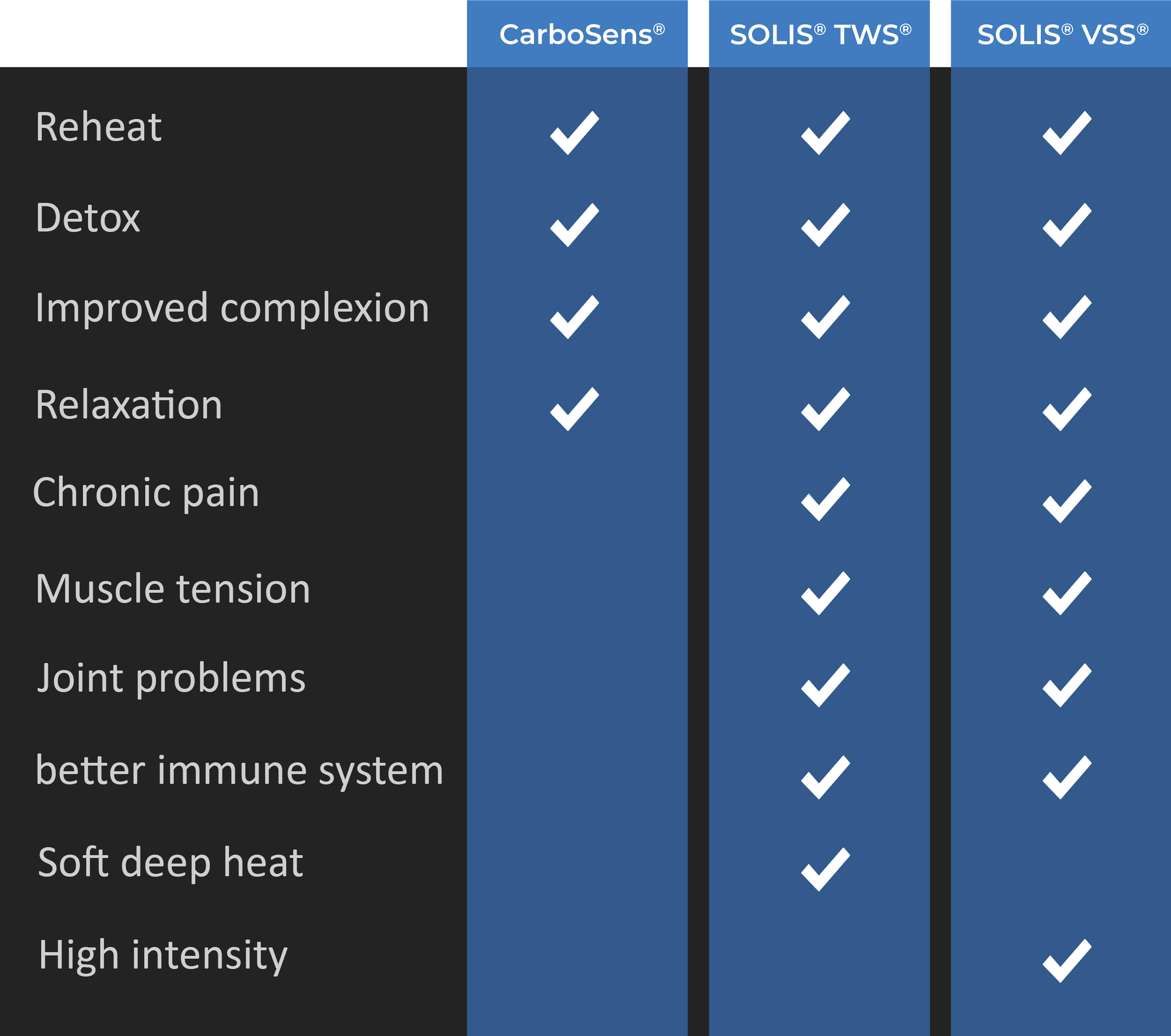
The animation clearly shows the differences in the penetration depth of infrared radiation. While the CarboSens® heat radiators are already absorbed by the outer dermis, the TWS® deep-heat h penetrate significantly deeper into the tissue, thereby warming the blood vessels directly. The peak performance is achieved by the SOLIS® VSS® full-spectrum heaters, whose Infrared-A components have an impressive penetration depth.
The exclusively available at ATROPA SOLIS® TWS® deep-heat heaters are both strong and gentle. This makes them the perfect all-rounders. The duration and intensity of irradiation are subject to (almost) no restrictions. The TWS® is particularly effective for sensitive skin types. The deep heat component (IR-B and IR-C1) accounts for over half of the total heat radiation emitted.
The skin and tissue have a limited heat absorption capacity.
Anything beyond that would bring no additional benefit or could overload the skin. The deep heat irradiation with moderate intensity allows for a longer heat treatment than with high-intensity heaters. Problem areas can thus be irradiated with the soothing deep heat for a longer period, resulting in more deep heat reaching them than with hotter heaters. Limit values, e.g., according to ICNIRP, are undercut many times over.
To produce the deep heat effects, the infrared rays must penetrate deep into the skin as described above. There, the tissue can absorb the heat directly and transport it further via the bloodstream. With panel heaters, the infrared-C rays are already completely absorbed by the skin surface. The skin, however, reacts with its defense mechanism and produces sweat. This sweat has the task of cooling the skin surface. The cooled skin surface consequently no longer allows heat conduction to deeper layers. A deep heat effect is absent.
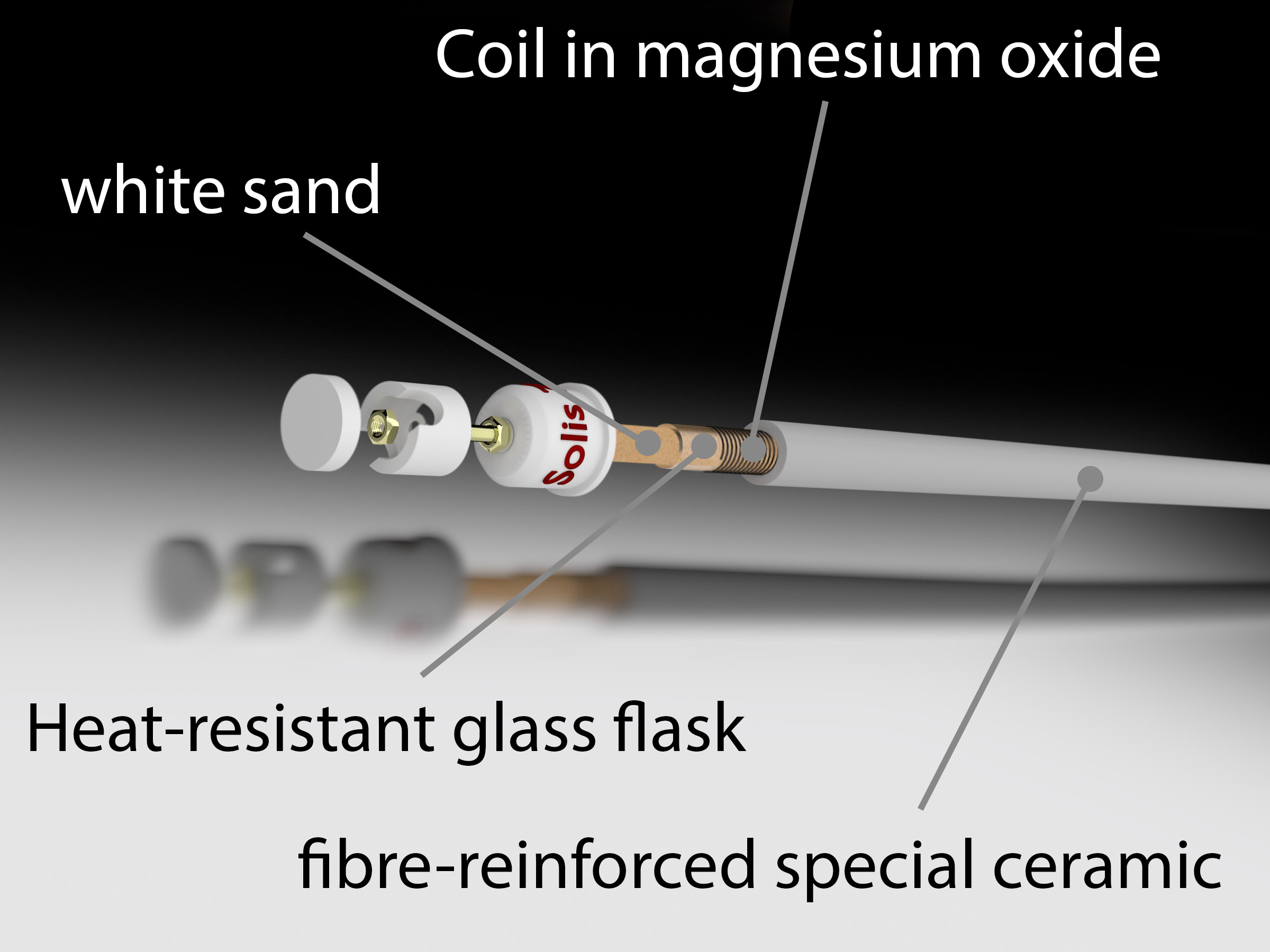
The TWS® deep-heat heaters, now in their fourth generation (Generations at a glance), are referred to as ceramic heaters because the radiating element is a special ceramic. However, the construction is much more complex.
The core consists of a glass tube filled with white sand. Due to its high storage capacity, its task is to distribute the heat evenly over the entire heater rod. It must be carefully funneled in and compressed under vibration.
The glass tube is encased in a heating wire made of a chromium-nickel alloy embedded in magnesium oxide (magnesia), which can withstand even the most extreme temperatures without degradation or corrosion. NiCr alloys are the gold standard for heating elements and represent the highest quality and reliability. The magnesium oxide serves as a separating and heat-conducting medium.
The outermost layer and radiating element is a fiber-reinforced special ceramic (silicon carbide). This fine ceramic has the task of strengthening the core, but also of reducing the high temperatures in the core to the desired level.
This construction guarantees an even and constant Infrared-B and Infrared-C radiation along the entire length of the heater rod.
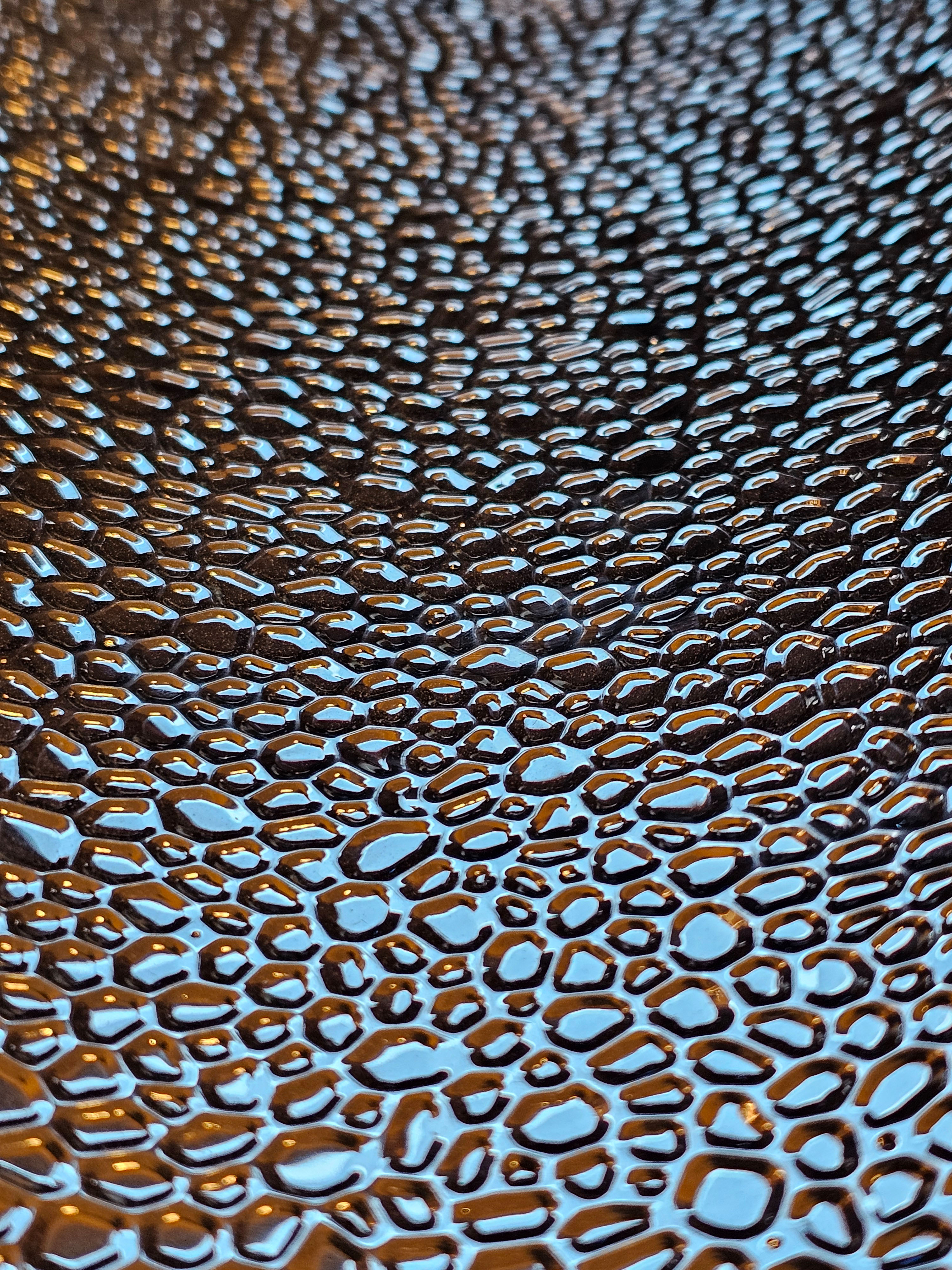
Polished aluminum reflectors are responsible for distributing the infrared rays, and their hammered surface allows for even radiation at an angle of 140°.
Each infrared heater undergoes a manual quality control before installation to ensure correct functionality and longevity.
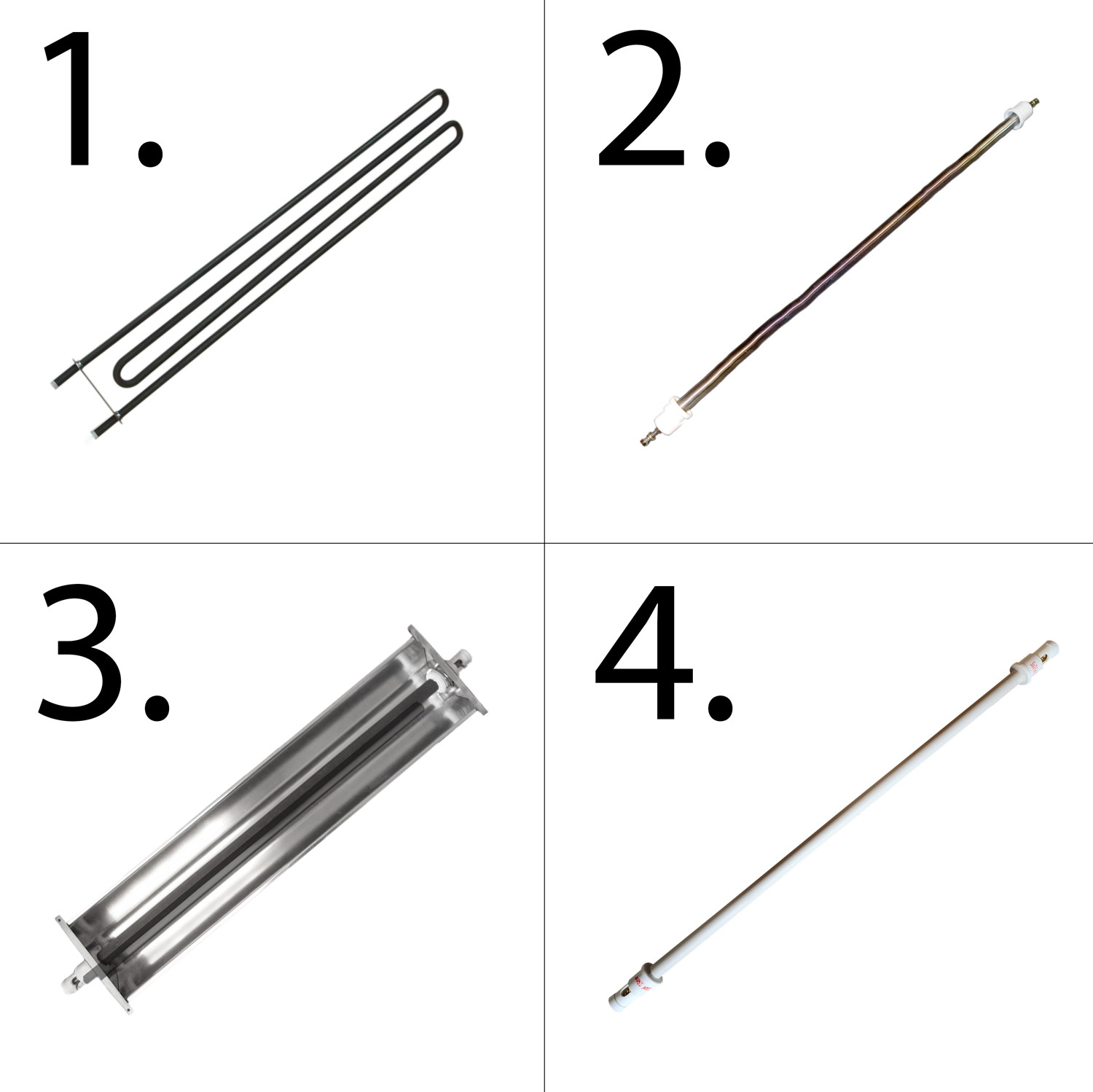
1st Generation: Incoloy Heaters
2nd Generation: Magnesium Heaters
3rd Generation: Ceramic Heaters
4th Generation: Magnesium Oxide-Ceramic Heaters with Sand Filling
The Incoloy heater consists of a special alloy called Incoloy, a mixture of nickel, iron, and other elements. The Incoloy heater radiates mainly in the Infrared C range, so it has only a slight deep effect.
+ Shatterproof, corrosion-resistant
+ Cheap to produce, as it already exists (e.g., washing machine)
- Radiation spectrum shifts over the course of its lifespan
- No uniform radiation, therefore a curved design
The magnesium heater is a type of infrared heater that uses magnesium oxide as a heat storage material. These heaters produce infrared heat that is perceived as pleasant and gentle. Magnesium heaters emit heat evenly and offer effective heat distribution.
+ Relatively uniform radiation from the entire heater rod
+ Constant spectral distribution over almost the entire lifespan
- Low efficiency, high energy losses
The ceramic heater emits a slightly more intense infrared radiation. The ceramic coating serves to radiate the heat evenly and to distribute the radiation effectively. However, it has a comparatively short lifespan.
+ Cheap to produce, as the technology already exists
- Low efficiency, high energy losses
- Medium lifespan
- Relatively slow but uniform heat development
The new magnesium oxide-ceramic heater with sand filling (like the SOLIS® TWS® deep-heat heater) is the highest quality form of deep-heat infrared heaters, known for its efficiency and durability. These heaters produce a uniform deep effect in the Infrared B and C range. The combination of magnesium oxide and ceramic ensures even heat distribution, creating a particularly pleasant feeling of warmth. The sand filling helps to store the heat efficiently and to radiate it evenly. Magnesium oxide-ceramic heaters with sand filling are energy-efficient and durable, making them an excellent choice for use in infrared saunas to produce a relaxing and soothing warmth.
+ Very uniform radiation from the entire heater rod
+ Efficient conversion of the supplied energy (very high efficiency)
+ Constant spectral distribution over the entire lifespan
+ Long lifespan
+ Low electricity costs
- Complex construction, therefore higher manufacturing costs

The proven SOLIS® TWS® infrared heater rods are always manufactured to the same high quality standard to meet the highest demands. They are particularly valued because they operate maintenance-free for a very long time.
We are therefore proud to offer a long 20-year warranty on the TWS® deep-heat heaters.
Of course, the TWS® deep-heat heaters are tested by TÜV for safety and functionality according to EN 60335 and EN 62233. Here you can download the TÜV certificate:
The infrared heaters have been tested by the Austrian research laboratory Austrian Institute of Technology in Seibersdorf. It has been confirmed that the SOLIS® TWS® deep-heat heaters do not emit infrared rays in the short-wave range (IR-A).
If IR-A radiation is also desired, we recommend the certified and tested SOLIS® VSS® full-spectrum heater.
It was also confirmed that the infrared heaters with LOW EMF technology do not lead to any electromagnetic stress on the human body.
Our advanced SOLIS® VSS® full-spectrum heater represents a breakthrough in red light infrared heaters. It is the perfect infrared heater for anyone who wants to achieve quick results. The VSS®, as its name suggests, covers the entire infrared spectrum, i.e., Infrared A, B, and C. The decisive advantage, however, is the extremely high deep heat component (IR-B and IR-C1). Thus, a particularly large amount of heat can be brought directly into deeper tissue layers. Of course, all limit values, e.g., according to ICNIRP, are met.
The VSS® full-spectrum heater comes closest to natural solar radiation without emitting harmful UV radiation.
No wonder the VSS® full-spectrum heater has quickly risen from a niche product to a bestseller. The times when Infrared-A heaters were reserved for medical professionals are over.
With the VSS® full-spectrum heater, anyone can get their daily deep heat boost at home in their own wellness oasis.
This allows the desired result to be achieved even faster, saving you time with practically every application! Whether for muscle cramps, neck tension, or musculoskeletal complaints, the VSS® delivers guaranteed results.
After years of development, ATROPA has heralded the next generation of infrared irradiation with the SOLIS® VSS®. It is an optimized full-spectrum heater specifically designed for the irradiation of skin tissue.
It allows for effective deep heat irradiation across the entire infrared range without excessively straining the body. Only by filtering the high-energy IR-A can a lot of deep heat reach the problem areas without damaging cells.
The requirements for the new full-spectrum heater were high: on the one hand, it should bring as much deep heat as possible into the body. On the other hand, it should ensure that the skin is not supplied with more energy than it can absorb. Effectiveness, tolerability, and durability of the heater were the focus of development. The new VSS® full-spectrum heater combines all these requirements in a single infrared heater. At the same time, we have succeeded in further increasing the high proportion of sustainable materials. For example, the entire heater housing is made of solid wood instead of plastic.
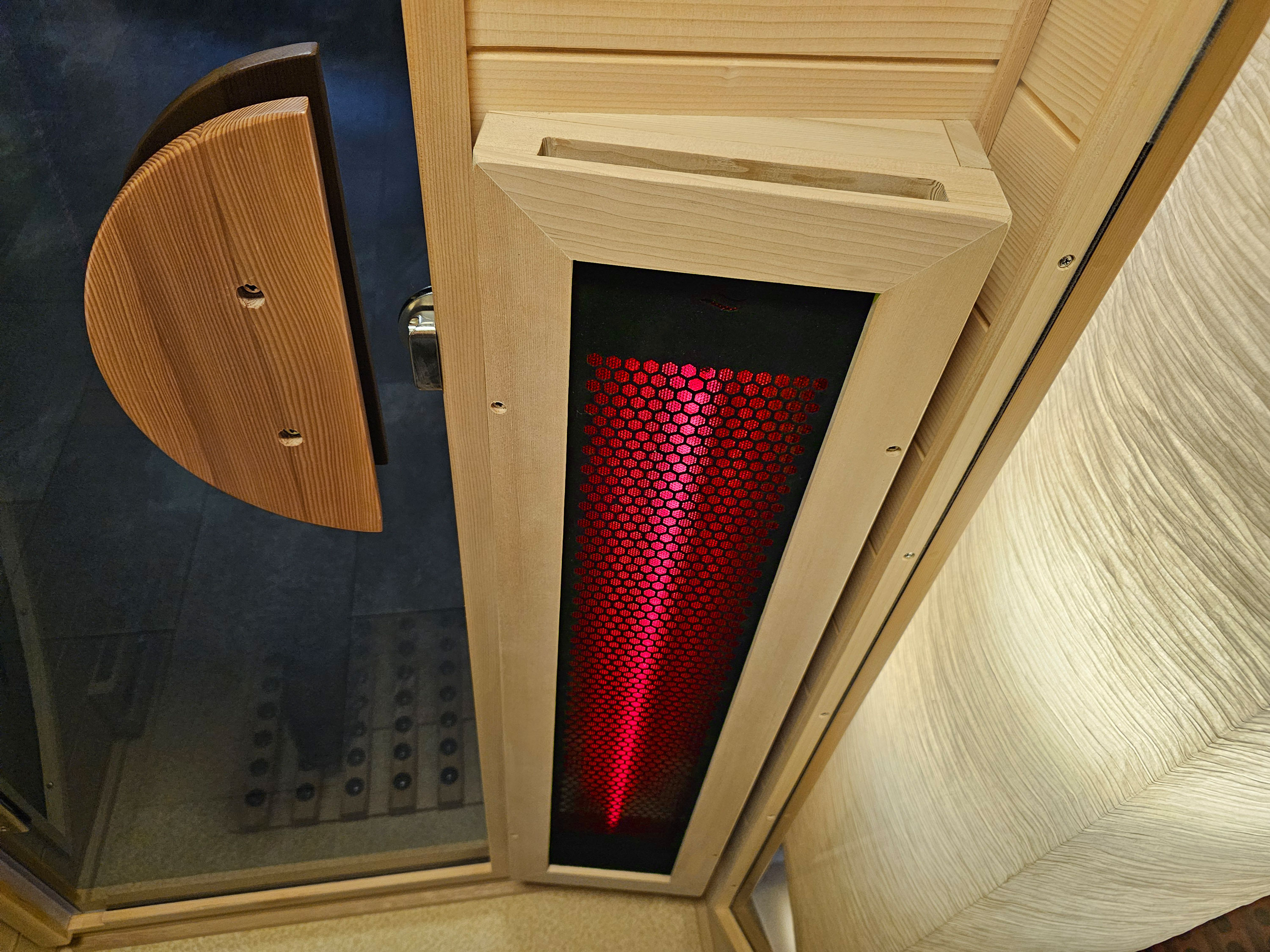
Compared to other infrared heaters, the VSS® has a somewhat more complex construction. Essentially, it consists of the heater rod, the reflector, the filter glass, and the housing with heat protection and a protective grille.
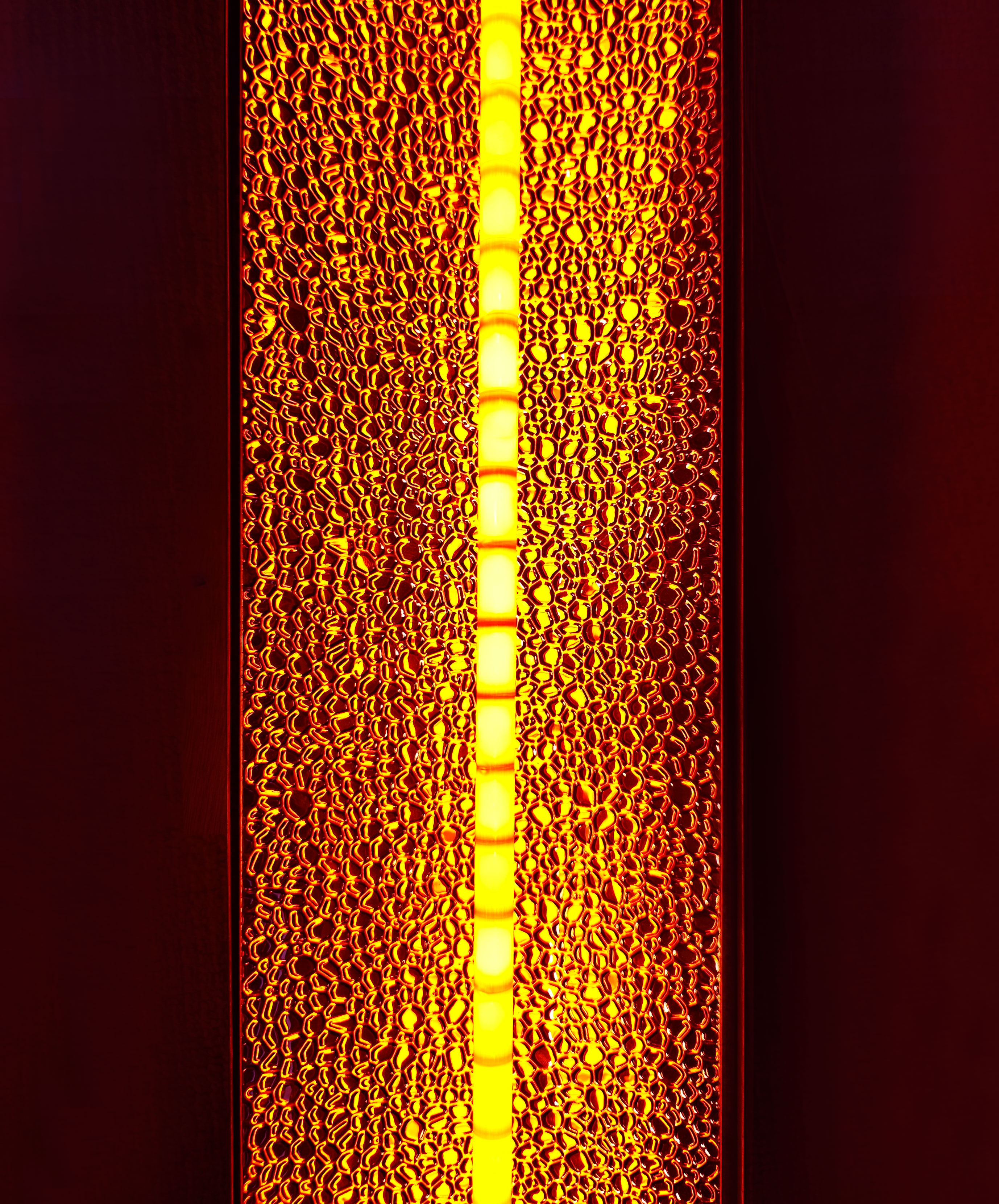
The perfectly synchronized interplay of the heater rod and the other components is crucial for the outstanding effect. The heater rod itself consists of a quartz glass tube. Inside is a coiled infrared filament made of a modified tungsten-molybdenum alloy. The high-tech infrared filament is divided into individual segments and is held in position by fine fastenings. It is wafer-thin but robust in order to generate a maximum of deep-acting infrared radiation with a low energy requirement. The glass tube itself is evacuated and filled with an optimized halogen mixture, which is airtight and can withstand the highest temperatures. The special halogen mixture ensures a long service life of the tungsten filament.
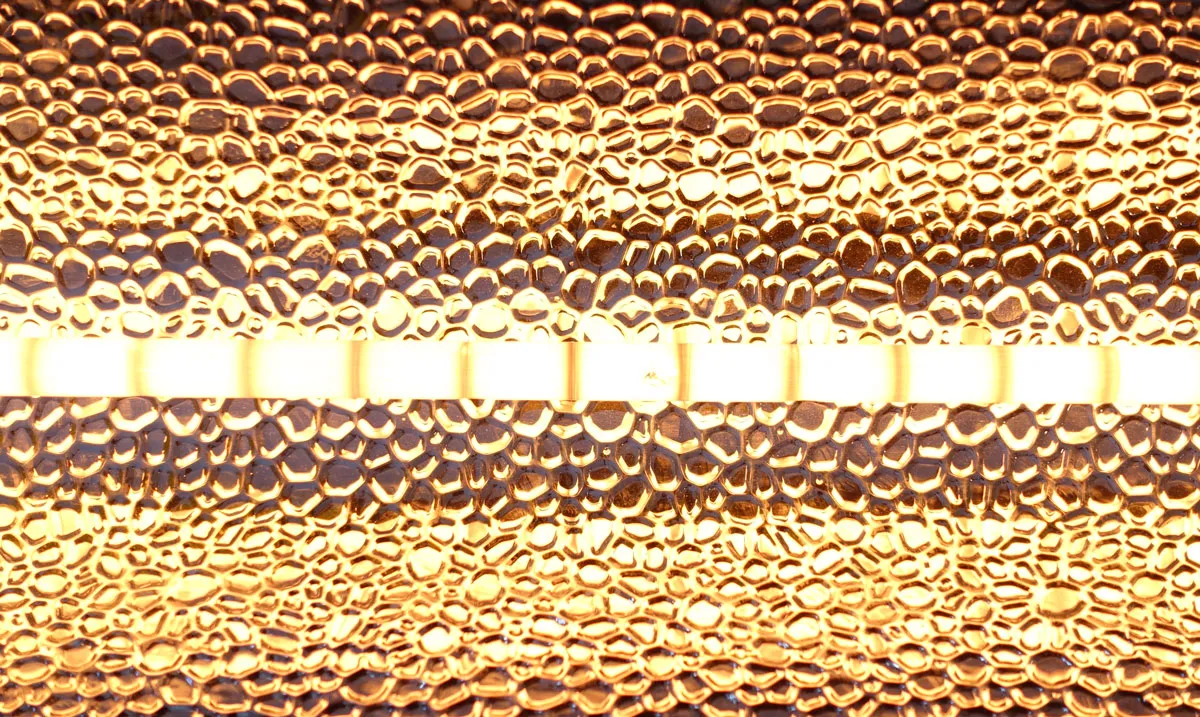
The reflector has a relatively simple purpose: it is supposed to redirect the infrared radiation that the heater emits to the rear, forward. This allows the full potential of the infrared heater to be utilized. The reflector consists of a double layer of aluminum and is equipped with a heat protection fleece towards the wood. The outer aluminum sheet has a hammered finish. This hammered finish creates hundreds of mini-reflectors that distribute the infrared radiation even more evenly in all directions.

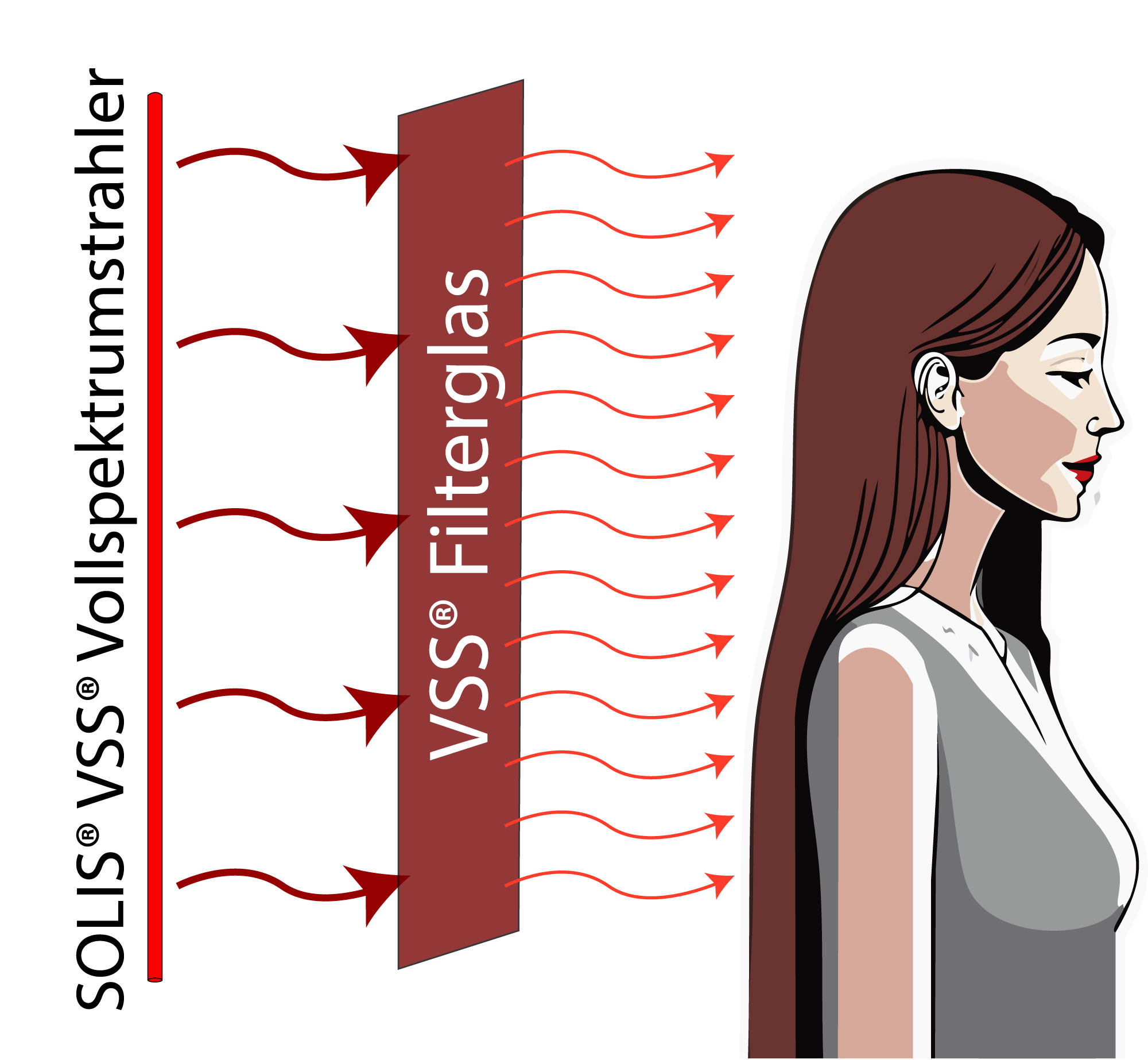
The VSS® filter glass allows for up to 300% (!) longer, safe irradiation time with deep heat than without filter glass. How does this work?
The radiation energy from the heater rod is very intense. If the infrared radiation were to hit the skin directly from the heater rod, it would quickly lead to thermal overload of the skin tissue. This is due to the high energy potential of the infrared filament, especially in the IR-A range. The filter glass now absorbs the high-energy Infrared A and converts it into gentler and more uniform Infrared-A, Infrared B, and Infrared C1 deep heat. Energy peaks are smoothed out. This transformation further increases the deep heat component.
Thus, the VSS® filter glass, through its absorption behavior, has the outstanding property of reducing the high-energy infrared radiation to a pleasant, tolerable level and smoothing out the energy peaks, while at the same time allowing the healthy deep heat to pass through. The filter glass itself also radiates infrared heat.
The VSS® filter glass consists of a modified, triple-fired vitroceramic made from an alloy of silicon, aluminum, and lithium oxides. It has excellent permeability for heat radiation and low thermal conductivity, but a very high temperature resistance. For optimized energy absorption, the surface on the inside is enlarged, but the radiating surface is smooth and non-porous.
The housing of the VSS® infrared heater is made of the same solid wood as the sauna itself. This has the advantage that, in addition to its warm and natural appearance, it also has very good insulating properties. Of course, it is equipped with a heat protection fleece on the back. The sophisticated internal cooling system of the heater housing prevents overheating even during longer applications. The use of FSC certified wood from sustainable forestry makes it, like the entire sauna, environmentally friendly.
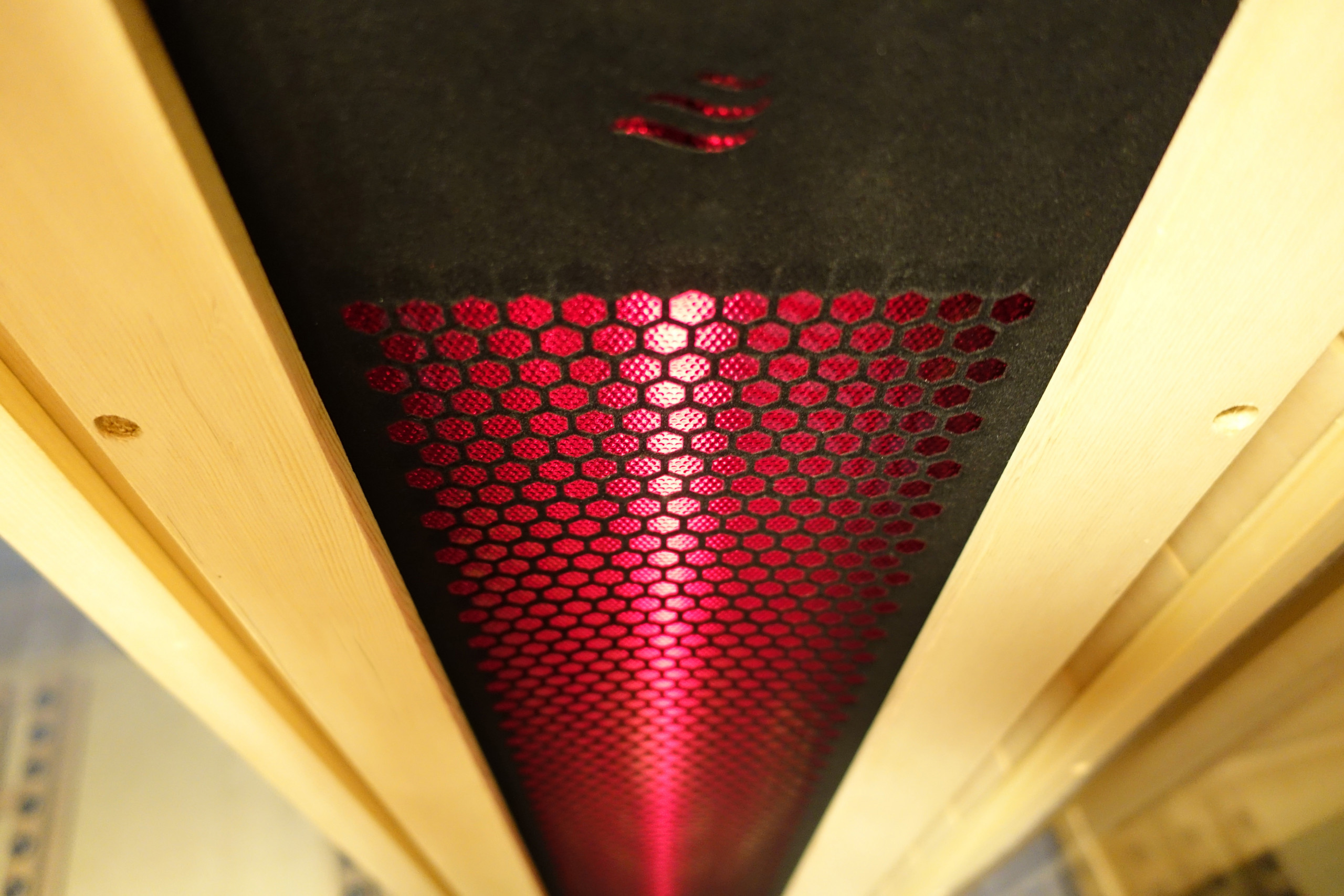
Unique and only with the SOLIS® full-spectrum heater: the heater rod is not only equipped with a filter glass, but also with the flocked honeycomb protective grille. For maximum protection and safety during infrared sauna sessions.

The proven SOLIS® VSS® infrared heater rods are always manufactured to the same high quality standard to meet the highest demands. They are particularly valued because they operate maintenance-free for a very long time.
We are therefore proud to offer a full 20-year warranty on the VSS® full-spectrum heaters.
Of course, the VSS® full-spectrum heaters are tested by TÜV for safety and functionality according to EN 60335 and EN 62233. Here you can download the TÜV certificate:
The VSS® full-spectrum infrared heaters have been tested by the Austrian research laboratory Austrian Institute of Technology Seibersdorf. You can find the spectral distribution of the infrared rays in the laboratory report.
If only gentler IR-B and IR-C radiation is desired, we recommend the proven and tested SOLIS® TWS® deep-heat radiator.
It was also confirmed that the infrared heaters with LOW EMF technology do not lead to any electromagnetic stress on the human body.
Infrared heaters can be divided into rod heaters and panel heaters. Rod heaters, like the TWS® deep-heat heaters and the VSS® full-spectrum heaters, are used for deep heat. Panel heaters like the CarboSens® are used for space heating and underfloor heating.
Panel heaters have a larger radiating surface. This means that uniform, gentle heat radiation is emitted from the entire surface of the heater. The surface temperature of panel heaters is usually between 80°C and 100°C, which means only long-wave IR-C rays are emitted.
The deep heat effect is therefore absent with panel heaters, as the required surface temperature cannot be reached.
Infrared saunas with panel heaters (so-called heat saunas) have the following application possibilities: as a (bio) sauna substitute if the high temperatures are not tolerated, for sweating and detoxifying the body, for warming up on cold winter days, or simply for wellness.
Although panel heaters have fewer application possibilities in infrared saunas compared to rod heaters, as they lack the necessary surface temperature for the deep heat effect, they are indispensable in many areas, e.g., for underfloor heating, where rod heaters would not be technically feasible. Or for calf heaters, where the use of rod heaters is perceived as unpleasant and could even promote the formation of varicose veins. Therefore, we at ATROPA have ingeniously further developed the conventional panel heaters.
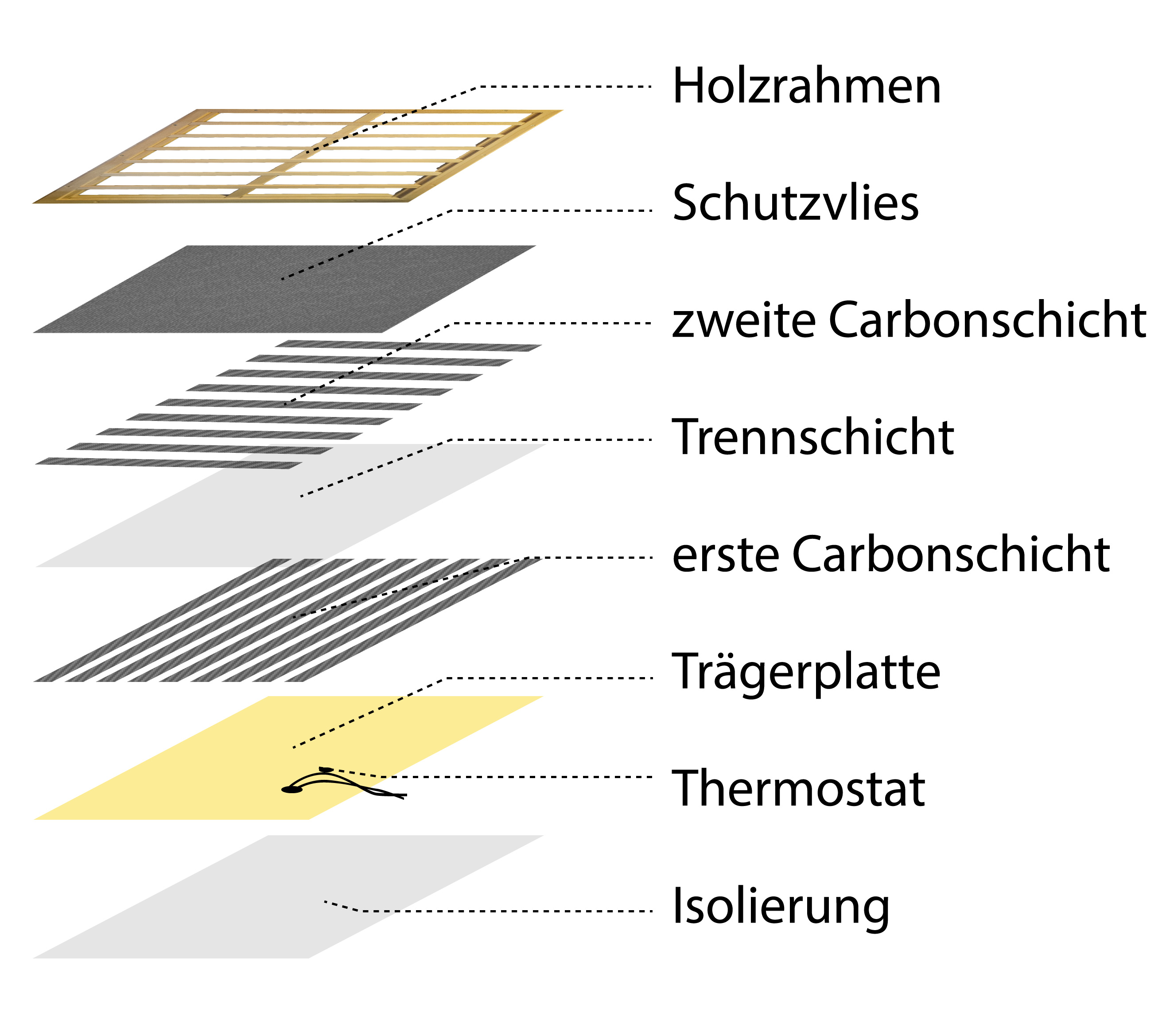
The CarboSens® panel heater consists of several functional layers, each of which fulfills a special task. We would now like to explain these layers in detail.
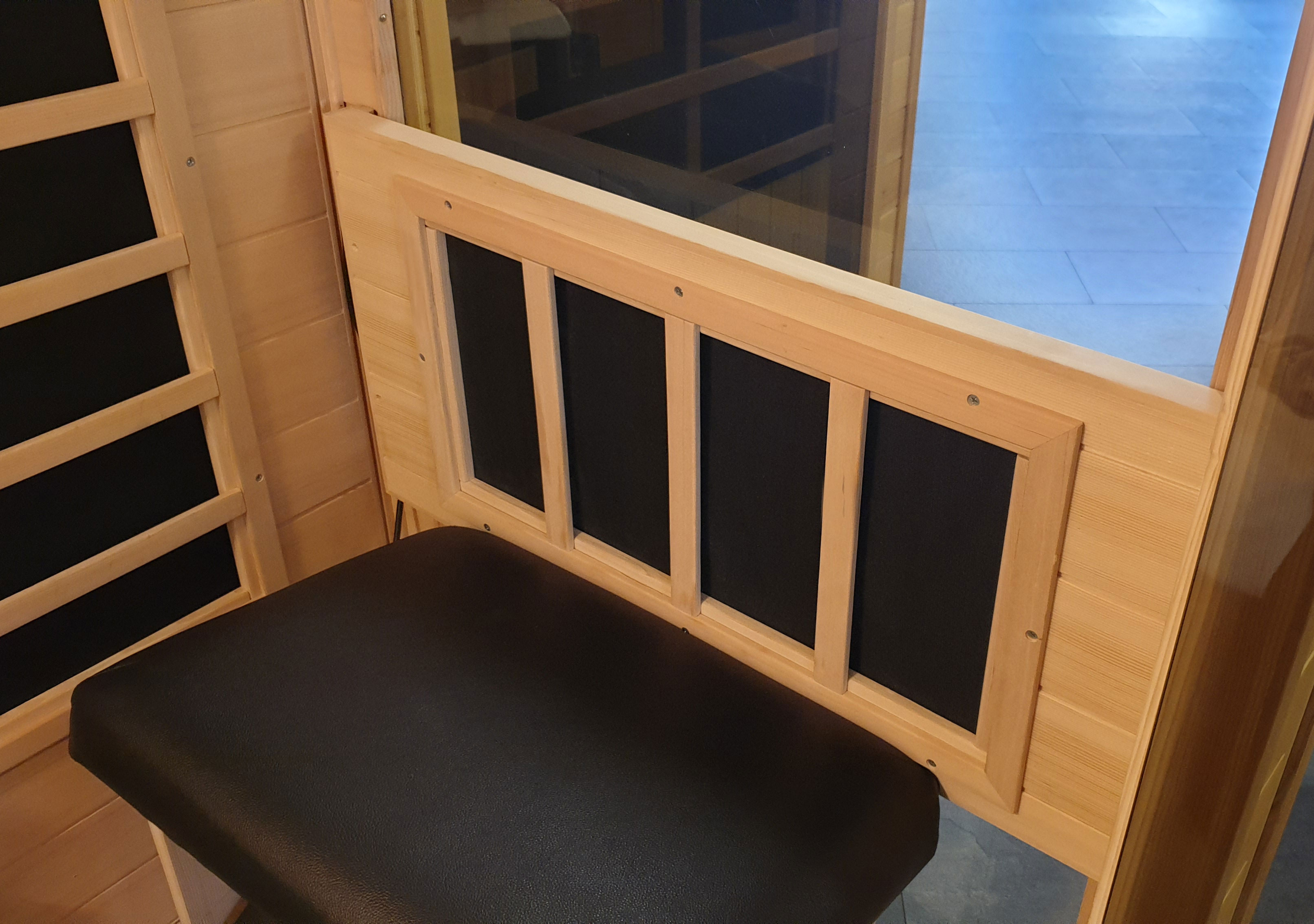
The wooden frame not only looks good, but it also plays a significant role in holding the CarboSens® panel heater in position. It is made of solid wood.
If the panel heater is used as an invisible underfloor heating system, the floor layer (e.g., linoleum) is used instead of the wooden frame.
The protective fleece actually consists of a black, coarse-meshed fabric. It prevents direct contact with the 80 - 100°C hot carbon panel heater. This prevents thermal overheating of the skin.
The first carbon layer consists of a layer of graphite. It is electrically conductive but has a specific resistance, which causes it to heat up. The graphite layer is "printed" onto the carrier plate using a special process. Depending on the thickness and width of the carbon tracks, heat radiators with different power ratings can be produced.
The second carbon layer is applied on top of the first carbon layer over a separating layer. It is arranged at a 90° angle to the first carbon layer and thus balances out electromagnetic fields, so that there is no electromagnetic stress on the body (LOW EMF technology).
The carbon layers are applied to the stable carrier plate. But the electrical connections and the heater's internal thermostat are also located on the carrier plate. The thermostat regulates the maximum heating temperature of the respective CarboSens® panel heater. Thus, the dimensions and number of the carbon tracks on the one hand, and the thermostat configuration on the other, are decisive for the heat output of the panel heater.
The insulation layer has the task of directing the heat in the desired direction and thus avoiding heat loss.
For example, with a surface heater in the wall, the heat should be emitted into the room and not into the wall. Likewise, when used as underfloor heating, the heat should be emitted to the floor surface instead of downwards into the ground.

The solid SOLIS® CarboSens® panel heater are of course also manufactured to the high quality standards. Each panel heater is first checked by machine and then manually for defects and irregularities using a thermal imaging camera.
They are completely maintenance-free.
Therefore, we can offer a long 20-year warranty on the CarboSens® panel heaters.
Of course, the CarboSens® panel heaters are tested by TÜV for safety and functionality according to EN 60335 and EN 62233. Here you can download the TÜV certificate:
It was also confirmed that the infrared heaters with the LOW EMF technology do not lead to any electromagnetic stress on the human body.