Deep Heat Infrared Heaters and Intensity Control
Infrared radiation has long been used for healing purposes and preventive health care, including in medicine. In the private sector, so-called infrared lamps have become increasingly popular, for example, to inhibit sinus infections.
The fourth-generation SOLIS® infrared heater sets new standards in infrared radiation thanks to its filling with fine white sand. In addition to excellent laboratory values, it is particularly convincing due to the overwhelmingly positive response from users. Therapists and pain patients recommend SOLIS® infrared heaters, as do wellness clients for the prevention of ailments.
For many years, we have been installing the advanced SOLIS® TWS® deep heat heaters in our Infrared Saunas. These heaters are particularly characterized by an effective penetration depth into the skin, homogeneous radiation behavior, and long-term reliability.
The intensive deep heat infrared heaters are used for the treatment of pain and tension in the spinal area. The other infrared heaters provide soothing, targeted infrared radiation to the neck, shoulders, and knees. This allows problem areas to be treated directly.
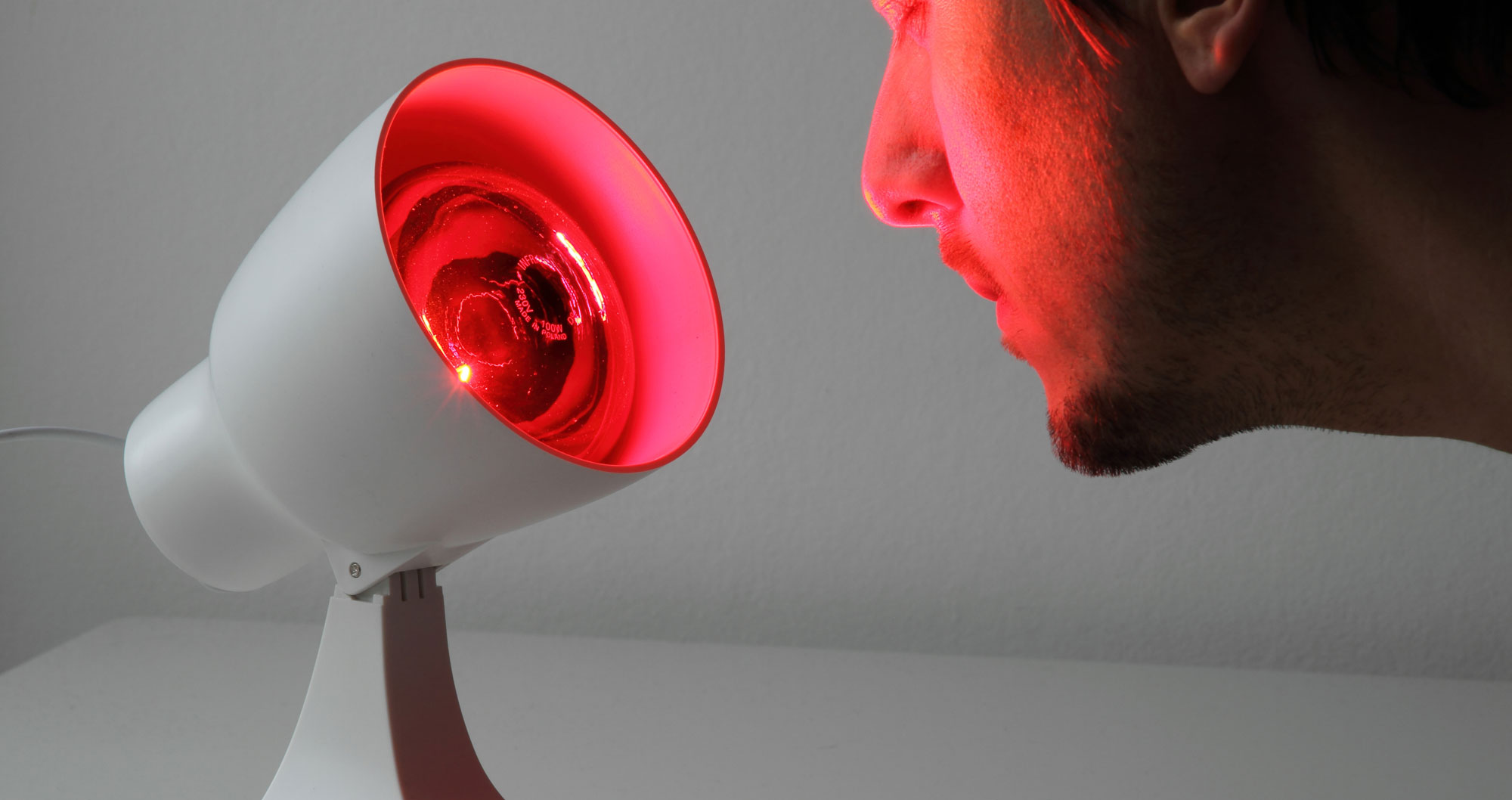

How the SOLIS® Infrared Heaters Work
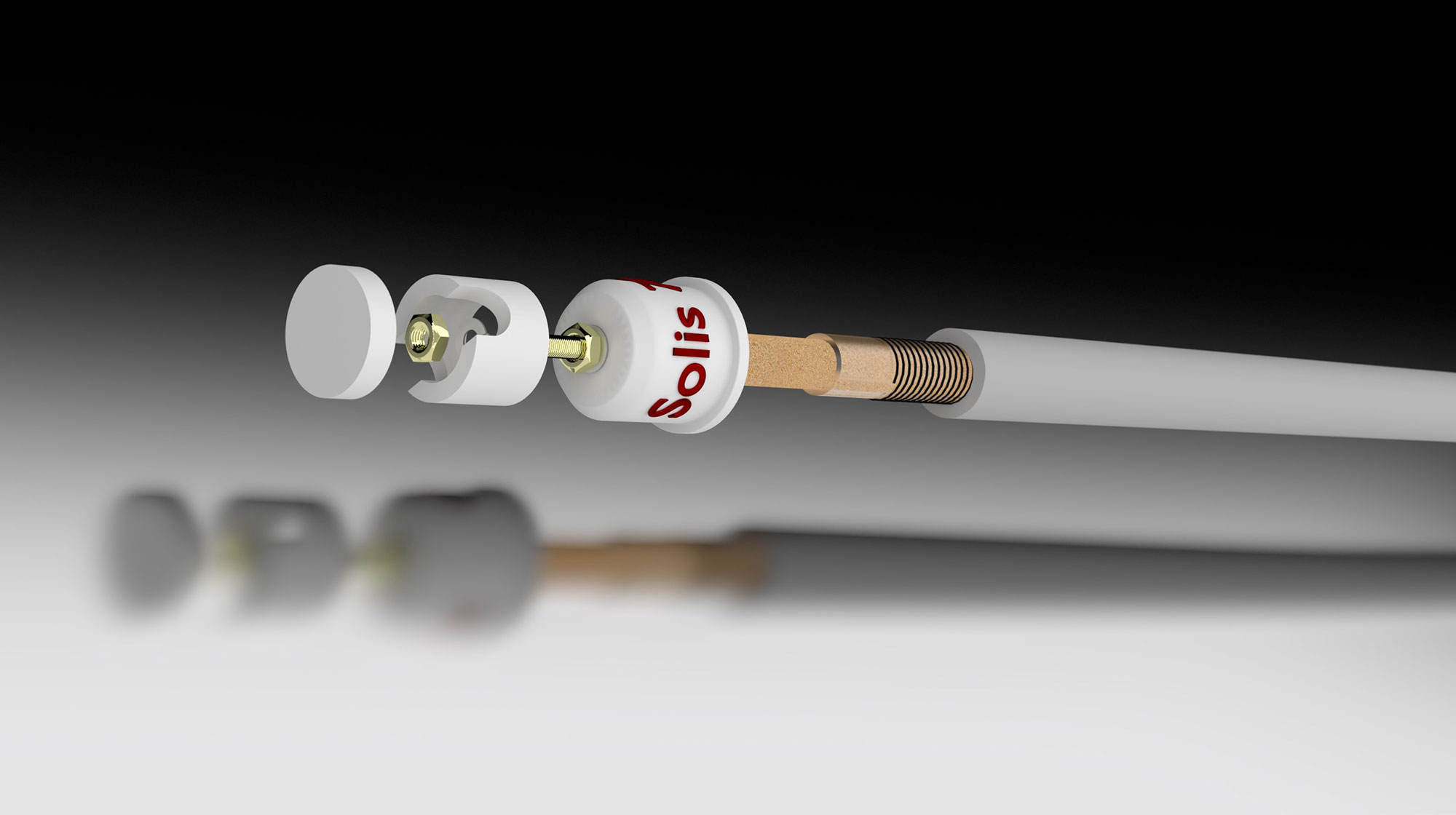
The 4th generation SOLIS® TWS® deep heat heater impresses with a simple yet ingenious principle:
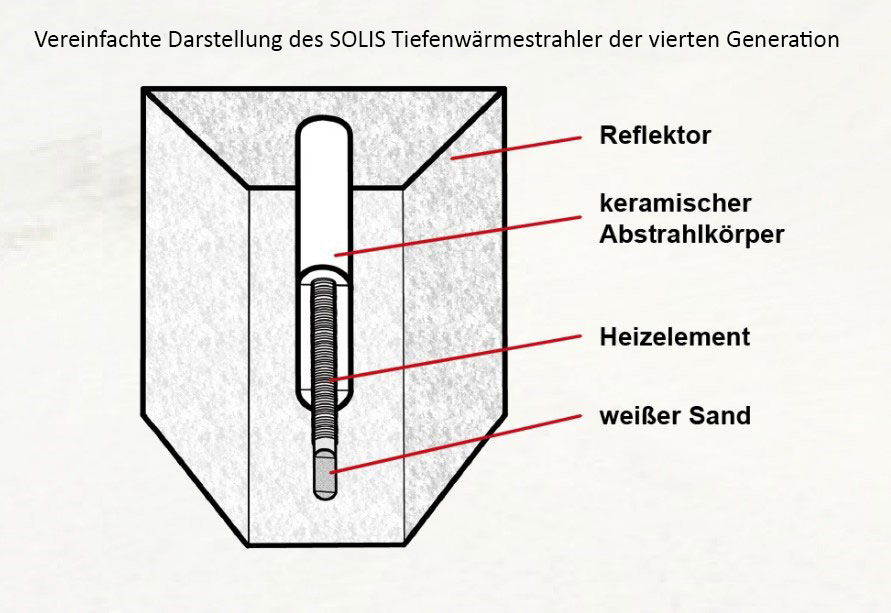
The coil, curved in a glass bulb and embedded in magnesium oxide, heats the fine white sand inside. This distributes the thermal energy highly effectively and evenly over the entire heater rod, preventing any "hot spots" from forming. From there, the heat is transferred to the ceramic radiating element, which emits the infrared radiation.
This infrared radiation in the IR-B and IR-C range is then transmitted to and into the skin. Polished aluminum reflectors ensure even radiation at an angle of 140°.
Through this principle, the heater unfolds its effect in two ways simultaneously:
1. Body parts that are particularly affected by tension or pain, so-called problem areas, can be treated in a targeted manner. The infrared radiation penetrates the skin and promotes the natural self-healing processes on the spot.
2. Through infrared radiation, heat enters directly into subcutaneous tissue, from where it quickly spreads throughout the body via the bloodstream. This is known as the deep heat effect. The core body temperature increases by up to one degree Celsius, and pathogens are successfully destroyed by the body (healthy fever).
Intensity Control
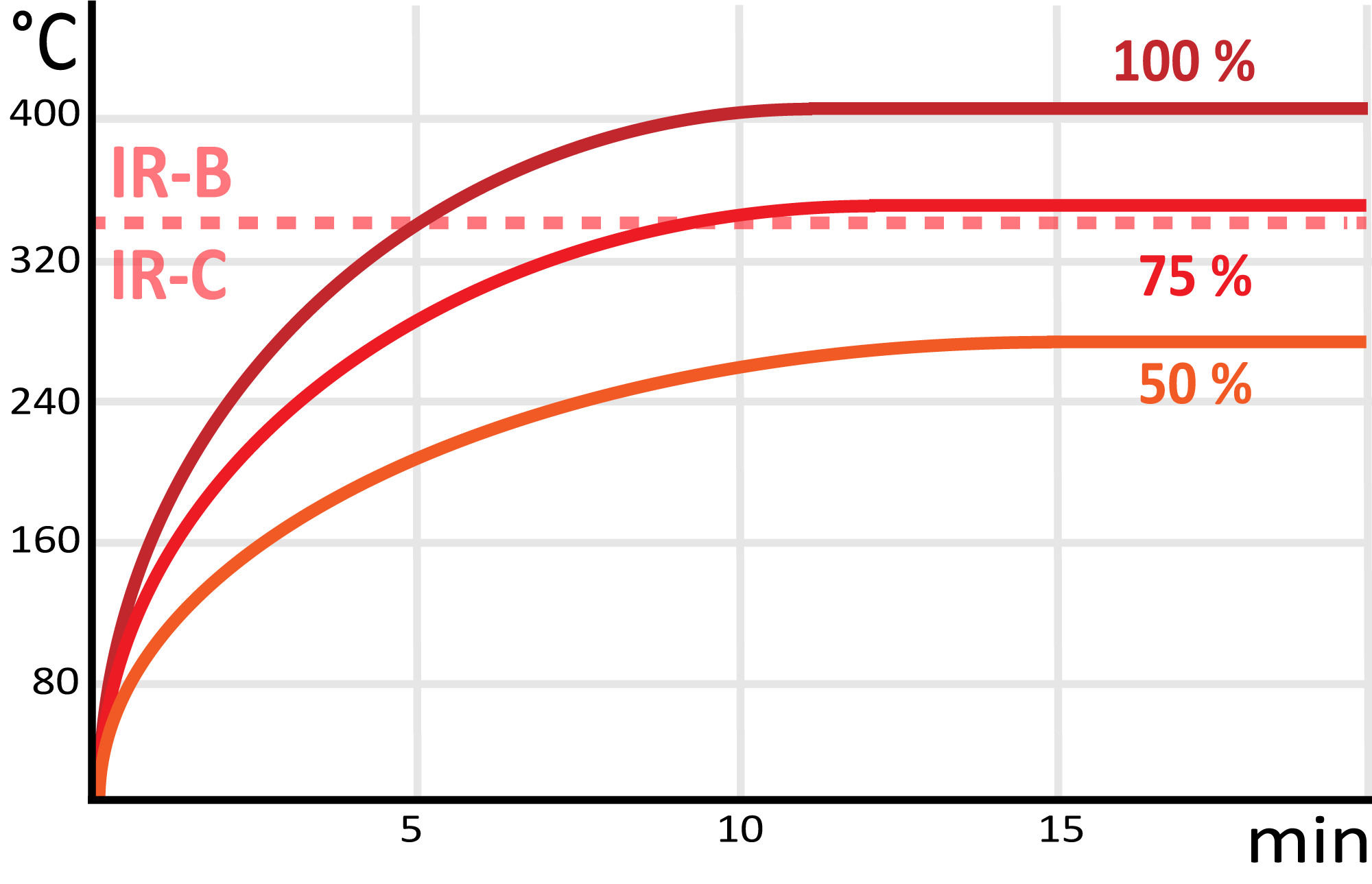
An essential feature of the ATROPA Infrared Sauna is its maximum customizability. Thus, all infrared heaters can be switched on and off independently. Furthermore, the intensity of the infrared radiation can also be regulated. In the ATROPA Infrared Sauna, it is possible to switch from a deep heat application to infrared radiation corresponding to that of a heat cabin at the touch of a button. This also allows for consideration of different heat sensitivities and the current state of health.
It is recommended to leave the highest intensity level at the beginning of the session (for approx. 20 min) and then reduce the power to let the pleasant warmth continue to have an effect for some time (approx. 10 - 15 min).
Intensity level: 80 - 100 %: Intensive deep heat (IR-B & IR-C)
Infrared rays penetrate directly into the dermis, thus warming the body from the inside. Self-healing processes are activated, and problem areas can be treated effectively and directly.
Recommended duration: approx. 15 - 25 minutes.
Intensity level: 50 - 80 %: Mild deep heat (IR-B & IR-C)
Activating infrared radiation with gentle deep heat.
Corresponds to a heat cabin. Optimal for wellness, relaxation, and healthy sweating. The body detoxifies, and circulation is stimulated.
Recommended duration: approx. 20 - 35 minutes.
Intensity level: 30 - 50 %: Gentle heat radiation (IR-C)
Corresponds in application to a heat cabin with panel heaters.
The infrared heat radiation is absorbed by the epidermis, the outermost layer of skin, and subsequently radiates slowly to the underlying skin layers. Ideal for slow warming on cold winter days.
Recommended duration: approx. 30 - 60 minutes.
Intensity level: 0 - 30 %: Bio-sauna (IR-C2)
Corresponds in application to a low-temperature sauna or bio-sauna.
For time reasons, we recommend preheating the Infrared Sauna at 100% to the desired air temperature. Afterwards, the intensity can be reduced to 0 - 30 %. The result is that the heat radiation is reduced so much that it feels roughly equivalent to a session in a bio-sauna without infrared heaters.
Recommended duration: approx. 30 - 60 minutes (without preheating time).
Tested, certified and proven over many years
The long-proven SOLIS® TWS® infrared heater rods are always manufactured to the same high quality standard to meet the highest demands.
We guarantee that our SOLIS® TWS® deep heat heaters do not emit any infrared rays in the short-wave range (IR-A).
If IR-A radiation is also desired, we recommend the certified and tested SOLIS® VSS® full-spectrum heater.
The infrared heaters were tested by the Austrian research institute Austrian Institute of Technology Seibersdorf and it was officially confirmed that they pose no health risks for a healthy adult with sufficient fluid intake, even with long-term use (several hours daily over years).
Of course, all our ATROPA Infrared Saunas are also GS tested and bear the CE mark (TÜV Austria).



Info: Infrared Radiation
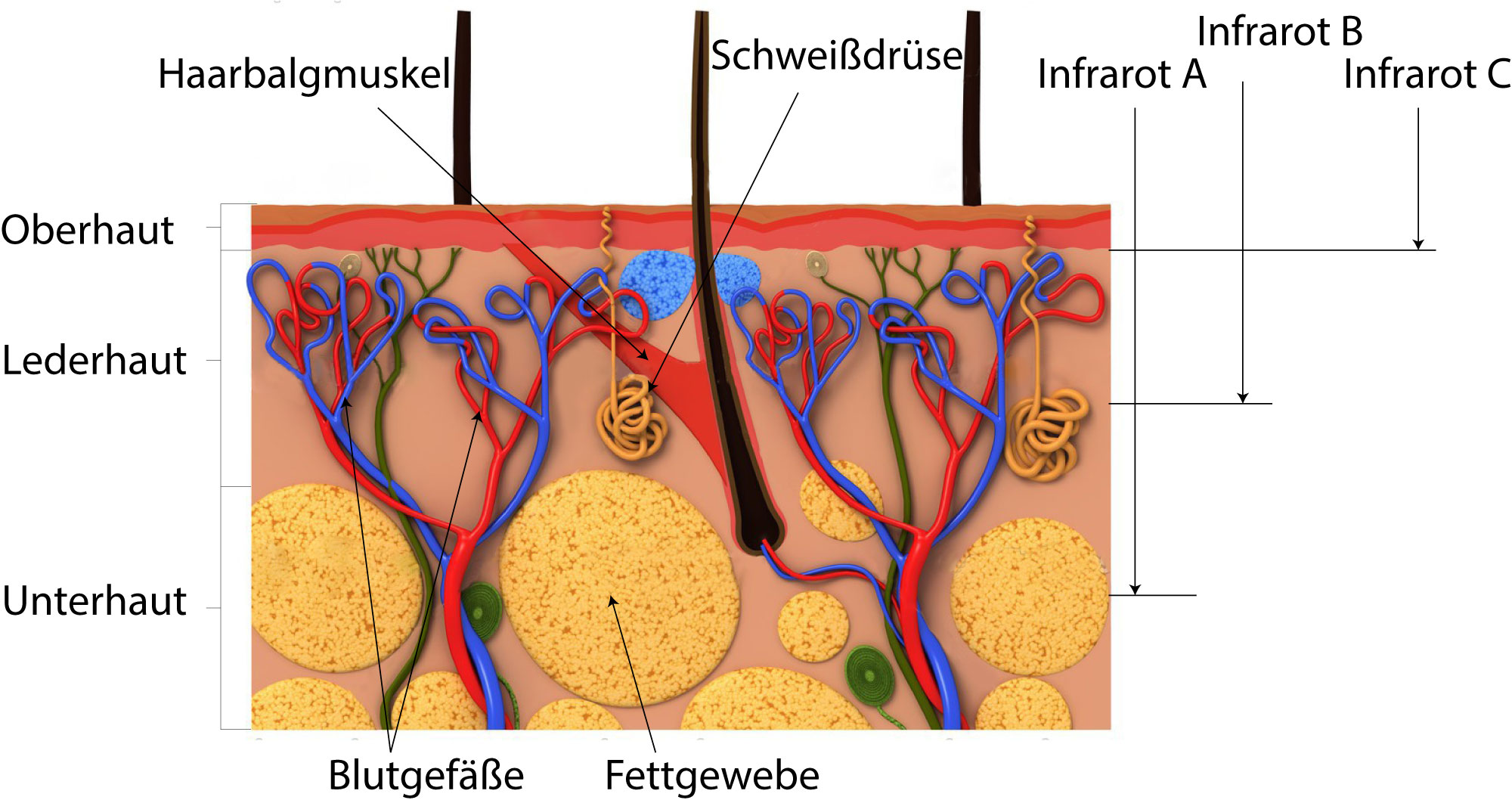
Infrared rays are electromagnetic waves with a wavelength of more than 780 nm, i.e., outside the visible range. Infrared radiation can be divided into three ranges: short-wave IR-A, medium-wave IR-B, and long-wave IR-C.
Infrared-A penetrates deepest into the skin and is mainly used by doctors and therapists for the professional treatment of specific body parts. Due to its high energy potential, its use is not recommended for sensitive individuals.
Infrared B and C, on the other hand, can be used without hesitation, although a deep-penetrating effect is only present in the Infrared B range. The radiation penetrates the skin and directly warms the tissue. The long-wave Infrared C rays are absorbed by the skin's surface, which means the underlying skin layers warm up more slowly and less effectively.
Info: Infrared Heaters - Rod Heaters and Panel Heaters
In general, infrared heaters can be divided into rod heaters and panel heaters.
Panel Heaters
Panel heaters have a large radiating surface and are used in heat cabins over the full surface or in deep heat cabins in the leg area. With panel heaters, uniform infrared radiation is emitted from the entire surface of the heater. The surface temperature of panel heaters is usually between 80°C and 100°C, which means that only long-wave IR-C rays are emitted. Therefore, the deep heat effect is absent with panel heaters.
Infrared Saunas with panel heaters (so-called heat cabins) have, among others, the following applications:
CarboSens® Technology
We use our CarboSens® panel heater technology in our Infrared Saunas. These are placed at the feet and legs to provide a pleasant but not harmful warmth for the feet.
These panel heaters have an integrated sensor to distribute the heat over the entire heater area, thus ensuring a pleasant, even warmth.

Rod Heaters
The second type of infrared heater is the rod heater, which is typically used in Infrared Saunas (deep heat cabins). In this case, the infrared radiation is emitted from a straight or curved heater rod with a surface temperature of about 360°C to 410°C. The infrared rays then hit the skin surface directly or indirectly via a reflector and partially penetrate the skin (IR-B). The advantage of this is that these deep heat heaters can warm the tissue directly, and the therapeutic effect begins quickly. Particularly noteworthy is the patented SOLIS® TWS® deep heat infrared heater, now in its fourth generation, which has been optimized for the even irradiation of the entire spinal area.
If the intensity of the rod heaters is reduced, effects similar to those in heat cabins with panel heaters can be achieved. This fact makes them the most popular and highly valued Infrared Saunas, as one gets an Infrared Sauna and a heat cabin in one.
Infrared Saunas with rod heaters (so-called therapy Infrared Saunas) have, among others, the following applications:
Infrared Deep Heat Heaters (TWS) - Generations at a Glance
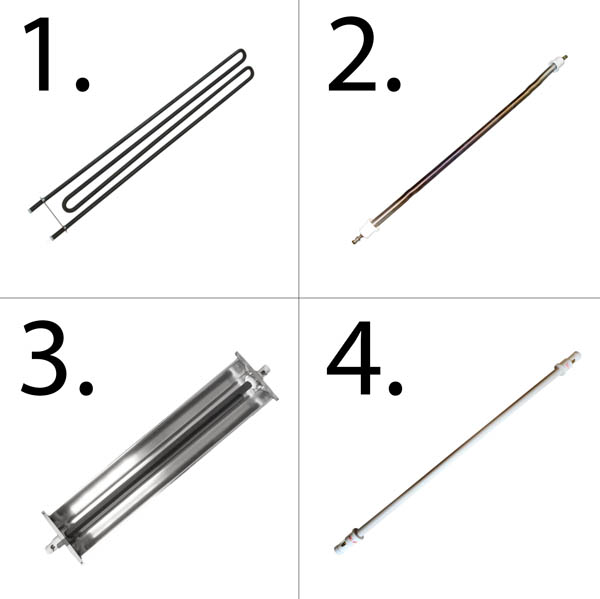
1st Generation: Incoloy heater
+ Shatterproof, corrosion-resistant
+ Inexpensive production, as already available (e.g., washing machine)
- Radiation spectrum shifts over the course of its lifespan
- No uniform radiation, hence often curved design
2nd Generation: Magnesium oxide heater
+ Relatively uniform radiation from the entire heater rod
+ Constant spectral distribution over almost the entire lifespan
- Not shatterproof, therefore handle with care during transport
3rd Generation: Ceramic heater
+ Inexpensive production, as technology is already available
- Low efficiency, high energy losses
- Medium lifespan
- Relatively slow but uniform heat development
4th Generation: Magnesium oxide ceramic heater with sand filling
+ Very homogeneous radiation from the entire heater rod
+ Efficient conversion of the supplied energy (very high efficiency)
+ Constant spectral distribution over the entire lifespan
+ Long lifespan
+ Low electricity costs
- Not shatterproof, therefore handle with care during transport
- Complex structure, higher manufacturing costs
 Generations at a Glance