Infrared Heaters
Overview
There are a variety of different infrared heaters, and this is intended to provide a brief overview of the different types of heaters that are installed in Infrared Saunas.
Of course, there are significant quality differences between infrared heaters. On one hand, there are high-quality infrared heaters that must undergo numerous test series before they come to market; on the other hand, there are cheap, mass-produced heaters. Good indicators for high-quality infrared heaters are the manufacturer's long-standing experience with the special requirements in Infrared Saunas, the warranty period, the price, company history, as well as references and customer opinions.
In addition to the type of infrared radiation emitted by a specific heater, the materials used and the construction play a crucial role concerning durability, resistance to breakage and impact, and corrosion resistance.
We would like to introduce you to the different types of heaters.
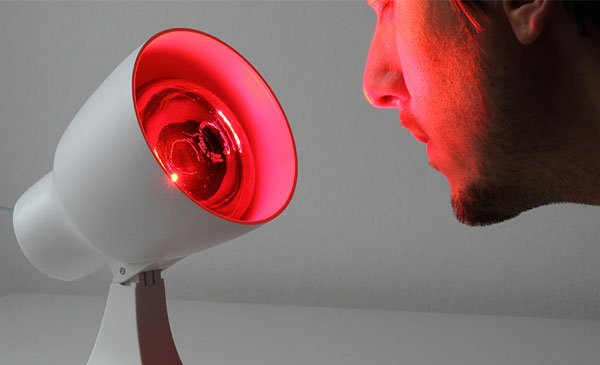
Philips infrared lamp
The different types of infrared heaters
Infrared heaters can be divided into rod heaters and panel heaters.
Panel heaters have a larger radiating surface. This means that uniform infrared radiation is emitted from the entire surface of the heater. The surface temperature of panel heaters is usually between 80°C and 100°C, which means only long-wave IR-C rays are emitted. Thus, the deep heat effect is absent with panel heaters. Infrared Saunas with panel heaters (so-called heat cabins) have the following applications: as a sauna substitute if high temperatures are not tolerated, for healthy sweating, for detoxifying the body, for warming up on cold winter days, or simply for wellness.
The second type of infrared heater is the rod heater. Here, the infrared radiation is emitted from a straight or curved heater rod with a surface temperature of about 380°C - 410°C. The infrared rays then hit the skin surface directly or indirectly via a reflector and partially penetrate the skin (IR-B). The advantage of this is that these deep heat heaters can warm the tissue directly and the deep heat effect occurs quickly. If the intensity of the rod heaters is reduced, effects similar to those in heat cabins with panel heaters can be achieved. This fact makes them the most popular and highly valued Infrared Saunas; you get an Infrared Sauna and a heat cabin in one.
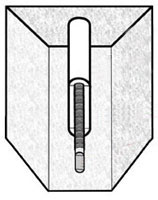
Rod heater
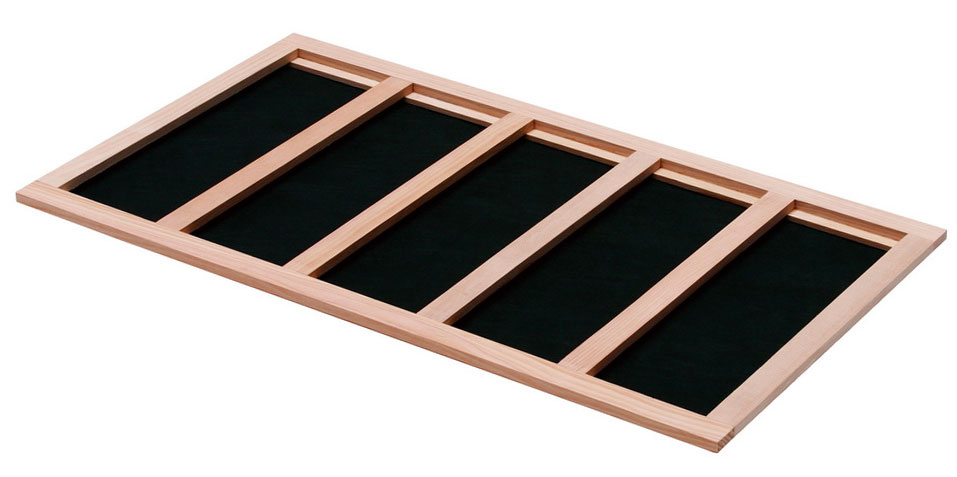
Panel heater
Which infrared heaters are used in ATROPA Infrared Saunas?
In our Infrared Saunas, only high-quality and tested infrared heaters are used. Depending on the requirements, both panel heaters and rod heaters are used.
Heat cabins consist only of panel heaters. But even in deep-heat Infrared Saunas, the targeted use of panel heaters in combination with rod heaters makes sense. For example, the upper body can be wonderfully irradiated with a rod heater with deep heat, while this would be unpleasant and unsuitable for the feet and calves. In the foot and calf area, therefore, panel heaters are always used.
In general, the infrared and heat heaters in the ATROPA Infrared Saunas are located where they work best. You can find more information about this under Infrared Heater Arrangement.

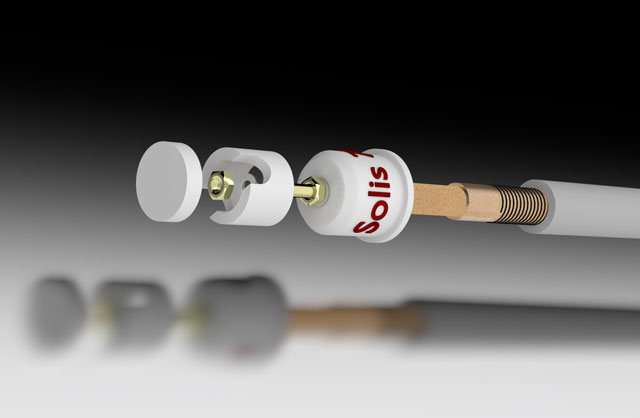
SOLIS TWS deep heat heater

SOLIS VSS® full spectrum heater
SOLIS VSS® full spectrum heater
With the ATR and ATX series, it is possible to choose between the SOLIS TWS® deep heat heaters and the SOLIS VSS® full spectrum heaters. The SOLIS VSS® full spectrum heaters radiate in the infrared A, B, and C spectrum. This results in a greater deep-penetrating effect and thus better irradiation of the inner tissue.
You also benefit from a faster heat-up time. The infrared A radiation can be felt immediately after switching on.
However, people with heat-sensitive skin should use these infrared heaters with caution, as the radiation temperature of these heaters is relatively high. The intensity and thus the radiation temperature can be easily and conveniently controlled with our ATR control system.